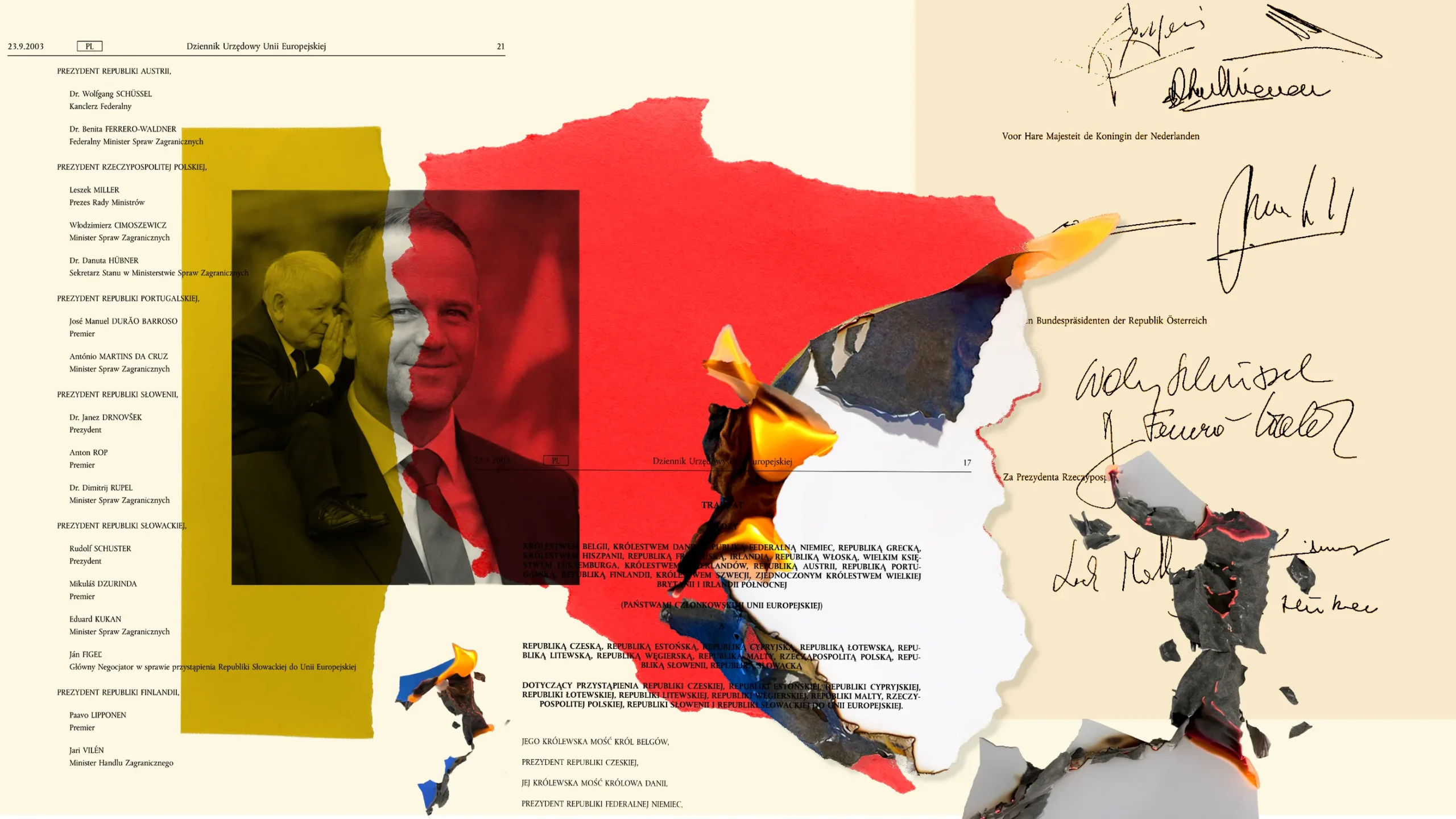
Poland’s EU Membership Architecture Under Stress
Poland's EU membership remains formally intact. What is degrading is the institutional machinery through which that membership operates.
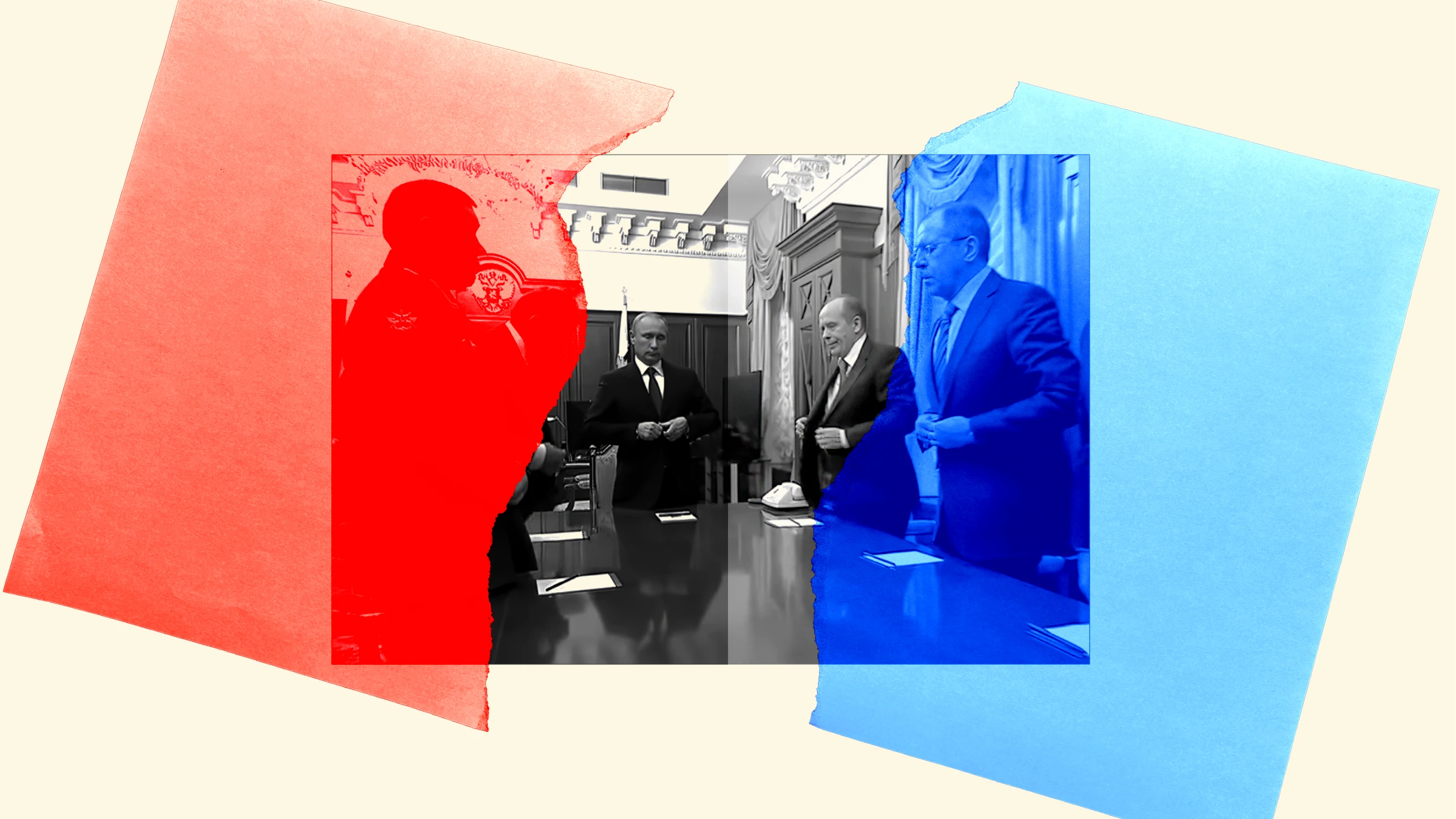
Designed decision-making channels — legislative process, judicial appointments, diplomatic nominations, defense financing — are increasingly blocked by a structural conflict between the presidency and the parliamentary government. Twenty-eight presidential vetoes since August 2025, 136 intelligence promotions blocked, 46 judicial nominations refused, the Washington embassy vacant, and €43.7 billion in EU defense financing (SAFE) rerouted through a legally contested executive workaround. The system continues producing outcomes — but through bypasses that are slower, legally fragile, and progressively degrading institutional capacity.
The conventional reading frames this as adversarial cohabitation. That reading captures a symptom while missing the structural condition.
Five concurrent external corridors
Five distinguishable external hostile operations corridors exert simultaneous pressure on the same institutional architecture that domestic blockade is already degrading from within:
Russian information operations and kinetic-cognitive hybrid attacks (Poland accounts for 21% of all documented Russian sabotage operations in Europe). Chinese geoeconomic dependency creation (trade deficit exceeding €31 billion; Huawei providing 60% of 4G infrastructure; Nuctech scanning equipment operating at the logistics hub through which over 90% of Western military aid to Ukraine transits). Domestic relay amplification networks that translate external pressure into sovereignty-coded grievance with cultural resonance. Belarusian border instrumentalization binding military resources permanently.
These corridors do not require coordination. Each corridor's success widens operating space for the others.
The structural finding
The institutional response cycle operates outside every measured reaction window on all assessed hostile operation types. Each failed response cycle worsens the baseline for the next. The architecture is locked in a degrading loop: channel failure produces workaround continuity, workaround continuity produces constitutional erosion, constitutional erosion deepens the veto architecture that generated the channel failure, and external corridors amplify each turn.
EU membership support has eroded from 92% (2022) to 69% (November 2025). Exit support has risen from approximately 6% to 25% over the same period. Institutional trust is bifurcated: citizens trust institutions that protect them (military 84–90%, NATO 81%) while distrusting institutions that govern them (Sejm 32%, Constitutional Tribunal 21%). This selective trust structure sustains operative capacity in the security domain while leaving political-institutional coordination progressively under-legitimated.
Internal repair pathways are blocked — constitutional reform requires an unavailable supermajority, full presidential-parliamentary alignment remains structurally impossible before 2030, and negotiated cohabitation lacks plausibility indicators. External judicial mechanisms (CJEU C-448/23, Constitutional Tribunal mandate expirations, MFF 2028–2034 conditionality) constitute the only operative pressure vector, but operate cumulatively and slowly.
What this analysis is — and what it is not
This is a structural diagnosis of a coordination architecture under concurrent stress. It identifies channel degradation under continued output production — a condition distinct from both systemic health and systemic failure. It does not predict collapse, propose interventions, or evaluate normative claims. It makes visible the interaction between domestic institutional paralysis and external hostile pressure that single-axis frameworks — rule-of-law conflict, populist cohabitation, hybrid threat — each fail to resolve on their own.
The analysis rests on a formally derived analytical method with published theoretical foundations. The evidentiary base draws on PKW electoral data, CBOS and IBRiS longitudinal surveys, CJEU case law, European Commission communications, CERT.pl/NASK reporting, NBP statistics, WJP Rule of Law Index measurements, V-Dem v16 data, and specialized assessments from PISM, GLOBSEC, DFRLab, Alliance4Europe, ISD, Mandiant, and HarfangLab.
This public analysis condenses the core diagnosis. Two companion documents present the findings with increasing depth: an executive briefing (DURCHD8, Poland's EU Membership: Institutional Stress and Strategic Vulnerability, March 2026, 3 pages) and a detailed analytical assessment (DURCHD8, Poland's EU Membership Under Stress: Institutional Degradation, External Pressure, and Cascade Risk, March 2026, ~14 pages). The full forensic analysis (~61 pages) provides the complete diagnostic apparatus. All three are available for discussion in a professional setting.