
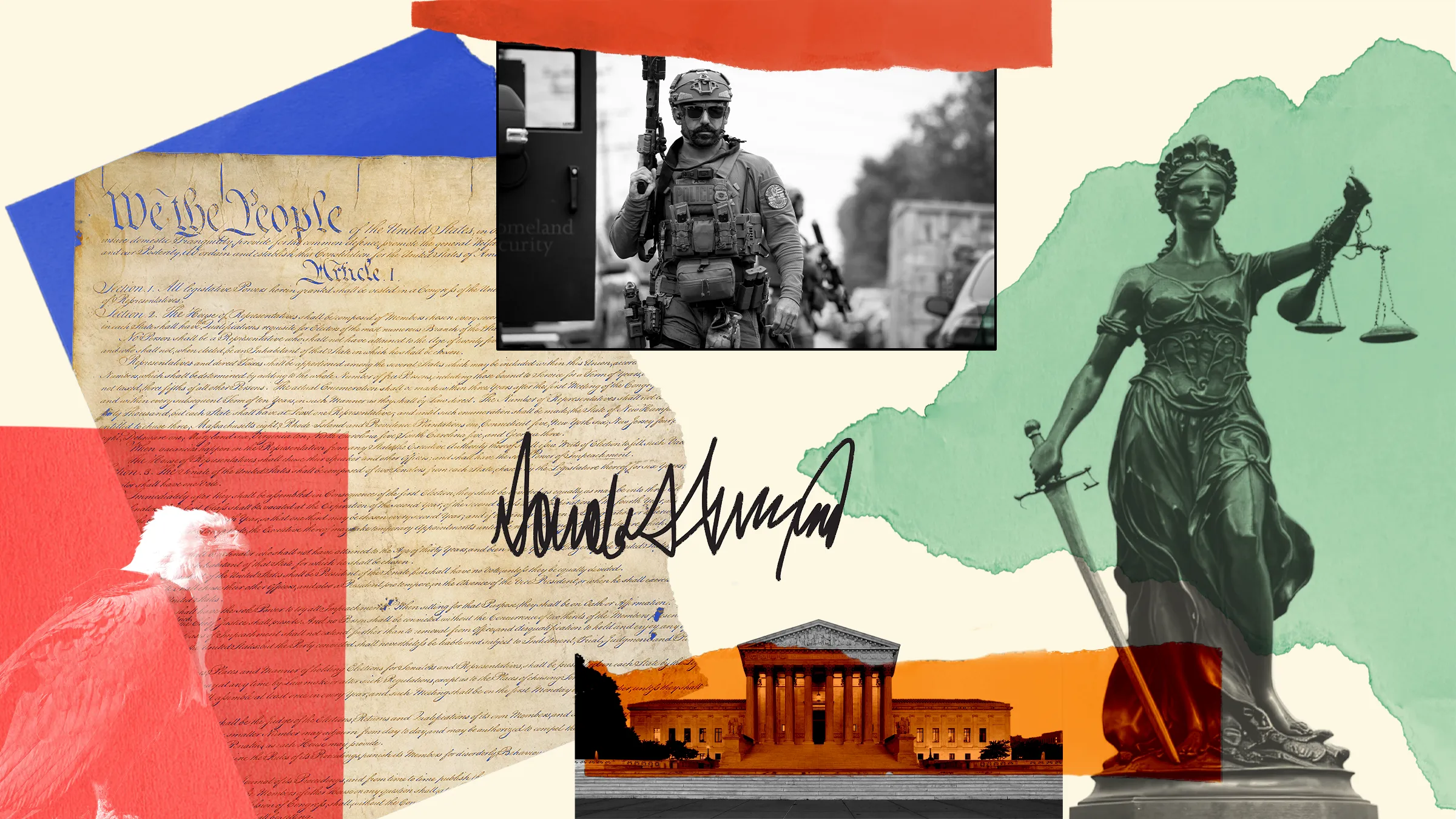
SWP Systemsprenger Response
On 16 January 2026 the Stiftung Wissenschaft und Politik in Berlin published Johannes Thimm’s study “Systemsprenger”. Its summary says the United States is developing towards competitive authoritarianism and that free and fair midterms in 2026 are not certain. Americans voted on 3 November. A day after the study appeared, DURCHD8 set the study’s verdict against its own evidence: the tensions are real, and the test that would tell stress from erosion is missing.
Companion Documents
Essay — A readable analytical article framing the subject, context, and significance.
Briefing — The decision-maker’s version: key findings, implications, and operational relevance.
Assessment — A concentrated analytical diagnosis for readers who need the argument.
Architectural Analysis — The complete scientific analysis.
Current State
As of 12 November 2026. Nine months on, the record feeds both readings, and the study still names no observation that would decide between them. In March V-Dem, which classifies regimes against published thresholds, moved the United States from liberal to electoral democracy and listed it among the year's autocratizers.
The courts keep deciding both ways. The Supreme Court ruled against the President on tariffs, 6 to 3 on 20 February, and at the end of June it kept a Federal Reserve governor in office whom he had tried to remove and struck down his order on birthright citizenship. On 29 June it let him dismiss members of the Federal Trade Commission at will. The midterms were fought in the same courts. On 31 March the President ordered citizenship lists for the states, priority prosecution of officials who issue ballots to ineligible voters and a barcode on every mailed ballot envelope. The Court let the order stand pending appeal on 24 August over three dissents, kept the Postal Service's ballot rule out of the midterm vote on 14 September, and on 25 September allowed an expanded federal check of voters' citizenship. On 14 October it sided with the federal regulator in a dispute over who gets the lowest advertising rate before the vote. The vote of 3 November is the first observation that tests both readings.
Mechanism
A state legislature redraws its districts, a president governs by decree, a prosecutor opens a case against a critic. One reader sees hardball with a long American history, another the next step towards a different regime, each from where they stand and from the story of America they already hold. The Einordnung recalls that history in its notes, from the Massachusetts of Governor Elbridge Gerry, whose redistricting of 1812 gave gerrymandering its name, to Roosevelt’s Executive Order 9066 and to Watergate, which ran its course through the courts and Congress.
A regime test settles in advance which observations count. It names thresholds, the signs that would speak against erosion and the conditions under which the verdict changes. The study borrows a criterion and a conclusion from Levitsky, Way and Ziblatt, the Einordnung finds, and sets none of its own. Its own pages hold the counter-evidence. Page 27 records that the lower federal courts rule against the administration in most cases, the Supreme Court excepted, and page 35 notes that federal judges serve for life. Both facts stand in the text and stay out of the reckoning. In polarised debate, the Einordnung concludes, that difference decides whether analysis brings clarity or joins the escalation it describes.
At Stake
For Berlin the verdict is more than a label. The study concludes that Germany's and Europe's relationship with the United States has to be rethought from the ground up, and the conclusion reached the government through the institute that advises it. A finding that the ally is heading for competitive authoritarianism changes what a government expects of Washington. A verdict without a test leaves its own direction open, towards the threshold or away from it. Every ruling and every vote can then be read as confirmation, by whoever already holds the warning and by whoever doubts it.
What would the vote of 3 November, and the rulings after it, have to show for the verdict to change?
Political Relations
The case has three parties. Johannes Thimm, who heads SWP’s Americas research division, wrote the verdict, and the institute’s leadership reviewed the study before it appeared. DURCHD8 tested it the next day. The subject is the American system, whose parts move apart. The President, in the study’s words, governs by decree wherever possible. Republicans hold both chambers of Congress, which the study calls a willing instrument of his agenda, yet in June both chambers passed resolutions to halt the war with Iran, largely symbolic votes that the Senate reversed a day later. The Supreme Court, where by the study’s count six of nine justices form the conservative camp, ruled for and against him in 2026. In April it held that the Voting Rights Act did not require Louisiana to draw an additional majority-minority district, and in June it let Mississippi count mail ballots that arrive up to five days after election day.
The states run the elections and sue the federal government, as California and others did over the election order. On 3 November the voters gave both chambers to the Democrats. Berlin is the reader, and its government deals with the administration the study judges.
Research
Einordnung der SWP-Studie „Systemsprenger” appeared on 17 January 2026, a day after the SWP study, as a five-minute text in German. It checks one thing: whether the evidence carries the conclusion. Two examples carry the argument, the redrawing of districts ahead of the 2026 midterms and government by decree, followed by the politicised investigations the study reads as an authoritarian signal. The notes set each against American precedent, from the DeLay map in Texas in 2003 and the Democratic maps in Maryland and Illinois to the Supreme Court’s ruling in Rucho v. Common Cause in 2019. The core critique has three parts: a regime classification that skips the regime test, a forecast without conditions for revision, and resilience the study records and leaves out of the balance.
Four weeks earlier DURCHD8 had checked a RUSI forecast against the institute’s own archive in Hybrid Warfare Is Already Working. The Einordnung applies the same discipline to a verdict from Berlin.
V-Dem shows what a test with published thresholds looks like. It scores elections only in election years, so its figures for 2026 will be the first to measure the vote of 3 November.