
Cognitive Warfare
Cognitive warfare targets perception, judgement and decision; its lever is cognitive load, which binds energy and raises the cost of a coherent orientation until the target can no longer hold a stable frame.
Its lever is cognitive load. Every attack forces processing, binds energy and raises the cost of coherent orientation. Where the pressure lasts, a public or an institution loses the capacity to hold a stable frame of its own.
How Does Cognitive Warfare Work?
It often begins with credibility. Facts, sources and procedures are marked as unreliable, seldom refuted, and the ground on which judgements rest begins to give way. What served as orientation becomes open to dispute.
Overload follows. Contradictory signals, ambiguity and a flood of information raise the demand on processing without producing conviction. Under sustained pressure resistance becomes expensive and passive adoption cheap.
If it goes on, judgement moves from deliberation to affect. Slow reasoning from evidence costs too much, and simple, emotionally charged readings gain a structural advantage. The attacker prevails once the target can no longer sustain a frame. Institutions may go on working outwardly after their capacity for coherent decision has gone.


Three phases of cognitive warfare and their result. Source: DURCHD8 diagram based on the mechanism described in the text.
How Do Definitions of Cognitive Warfare Differ?
Source Definition What it centres on Wikipedia, article “Cognitive warfare”, October 2026 “any military activities designed to affect attitudes and behaviors”1 Military activity and its aim Rushing, Hersch and Xu, University of Colorado Colorado Springs and US Air Force Academy, 2026 “a sustained and adaptive contest over human decision-making”2 Decision-making over time DURCHD8 Targets perception, judgement and decision through cognitive load The capacity to hold a frame The broad definitions name an activity and its aim. The DURCHD8 definition names the mechanism, the load on processing, and with it the condition on which the outcome turns: whether the target can still hold a frame.
How Does It Differ from Narrative Warfare?
Narrative warfare shifts the frame within which information is interpreted. Cognitive warfare goes deeper and degrades the capacity to maintain any frame under pressure. On DURCHD8’s Terrain page the two appear side by side, as forces that accelerate the erosion of durable coordinated power.3
Disinformation is a tool here. What counts is whether perception, trust and the logic of decision move in the intended direction, whatever the truth of the material used.
Which Terms Sit Close to It?
Term What it targets Origin How DURCHD8 uses it Cognitive warfare Perception, judgement and decision NATO Allied Command Transformation;4 study by François du Cluzel, 20215 Its precise term for attacks on processing capacity Narrative warfare The structure that determines the meaning of signals DURCHD8 Shifts the frame within which information is interpreted Information warfare Signals: their availability, integrity and flow US Department of Defense doctrine A separate level, the transmission of signals Influence operations Perceptions, attitudes and behaviour of audiences US and NATO doctrine An umbrella term; cognitive and narrative warfare name mechanisms it may employ FIMI Public discourse and democratic processes in the EU EU External Action Service and European Commission A classification of who acts and what they target Cognitive domain operations Cognition, perception and decision of an adversary Doctrine of the People’s Liberation Army Used descriptively for Chinese strategic concepts Where Does DURCHD8 Apply It?
The diagnostic framework uses cognitive warfare as its precise term for attacks on processing capacity, grounded in the Narrative Power proof. The flagship NATO Consensus as Ceremony finds the term inside the alliance itself. It reads cognitive warfare as a “solution push” from NATO’s Allied Command Transformation, one case of the domain expansion that March and Olsen’s garbage can model explains.6
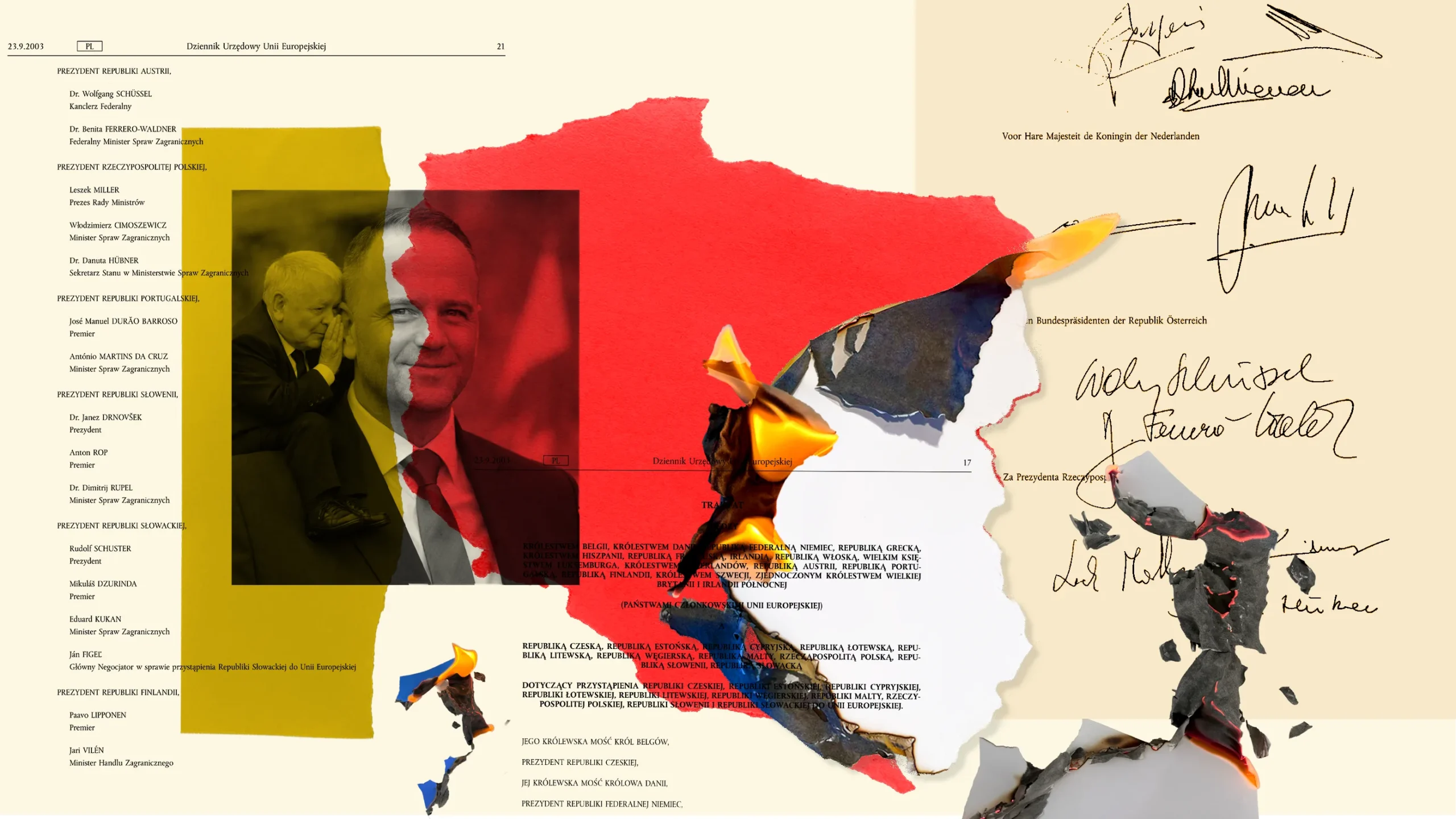
A related pattern runs through DURCHD8’s Poland study. After Russia’s invasion of Ukraine in 2022, belief that the 2010 crash of the presidential plane near Smolensk was an assassination rose to between 36 and 38 per cent, among PiS voters to 78, and official attempts to correct the record hardened it. The study calls this a cognitive infrastructure that resists institutional correction once it is embedded deeply enough.7


See Also
Sources
1 Wikipedia, “Cognitive Warfare,” lead section, accessed November 12, 2026, https://en.wikipedia.org/wiki/Cognitive_warfare.
2 Bonnie Rushing, William Hersch, and Shouhuai Xu, “Cognitive Warfare: Definition, Framework, and Case Study,” arXiv:2603.05222 (2026), Definition 3, https://arxiv.org/abs/2603.05222.
3 DURCHD8, “Terrain: Contested Information Environments,” 2026, accessed November 12, 2026, https://durchd8.com/terrain/.
4 NATO Allied Command Transformation, “Cognitive Warfare,” https://www.act.nato.int/activities/cognitive-warfare/.
5 François du Cluzel, “Cognitive Warfare” (NATO Allied Command Transformation, Innovation Hub, January 2021), 3, https://www.innovationhub-act.org/wp-content/uploads/2023/12/20210113_CW-Final-v2-.pdf.
6 DURCHD8, “NATO Consensus as Ceremony” (Zenodo, 2026), concept DOI; current version V4, doi:10.5281/zenodo.20267196, May 18, 2026, https://doi.org/10.5281/zenodo.20107106.
7 DURCHD8, “Poland: Two States, One Republic” (2026), section “Periodization and Spine Identification,” paragraph “Smolensk as epistemic infrastructure,” https://durchd8.com/poland-s-eu-membership-architecture-under-stress/.
Related


Last reviewed 12 November 2026