Illustration: © Sabine Mescher
Academia · Civil & NGOs · Corporate · Institutions · Intergov · Media · Non-State · States
Narrative Warfare · European Union · Germany · NATO · Russia
Narrative Warfare
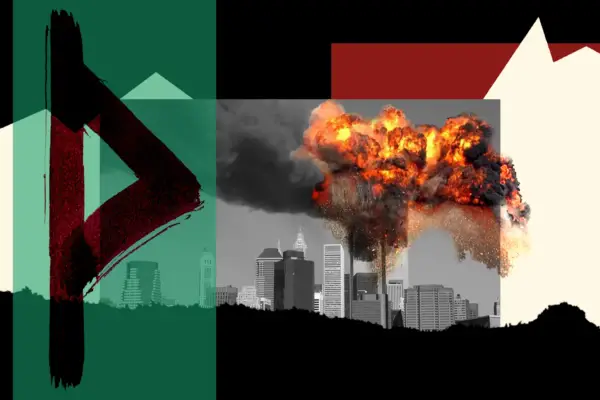
Before Hungary voted on 12 April 2026, DURCHD8’s NATO study records, a Russian network ran 1,770 automated accounts, and Russia’s foreign intelligence service had a plan to stage a fake attempt on Viktor Orbán’s life. Turnout reached 79 per cent, the highest since 1990, and Orbán lost. Narrative warfare targets the structure that determines the meaning of signals. It works where trust in institutions has already thinned. Hungary is the counter-case.
Current State
As of 18 October 2026. Europe now counts the operations closely, and the count finds a large output with little real engagement. The EU's foreign service recorded 540 incidents of foreign information manipulation in 2025, run through some 10,500 channels. It attributed 29 per cent to Russia and 6 per cent to China, and 27 per cent used artificial intelligence. One Russian network, Portal Kombat, put out around 10,000 articles a day across 101 websites, in part, the service suspects, to seed the data from which AI models learn. The same report found the AI videos of two Russian operations easy to spot and their engagement low.
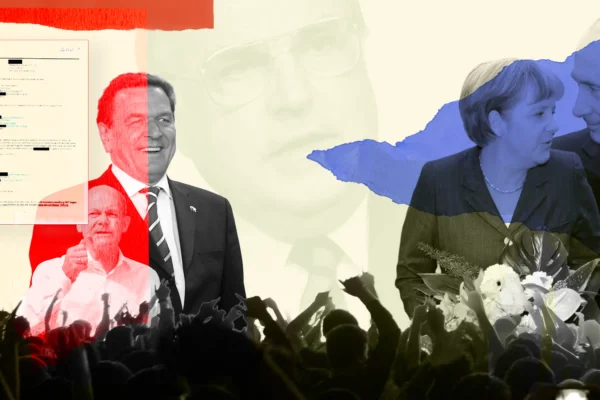
Governments have added sanctions to exposure. Berlin attributed the Storm-1516 campaign to Russia in December 2025. On 8 October 2026 the EU renewed its sanctions for Russia's hybrid activities, which now list 80 people and 20 entities.
Mechanism
A fake page in the layout of Der Spiegel is news to the reader who trusts the layout and an operation to the analyst who traces its domain. What a signal means depends on who reads it, from where and within which story, and narrative warfare works on that point. It hands out roles before the facts arrive. In a David-and-Goliath frame, as DURCHD8’s overview of contested information spaces puts it, the stronger side is cast as aggressor whatever the context, and evidence against the frame is absorbed or ignored. The frame then decides which response looks proportionate and who still has the standing to be believed.
When Churchill told his country that he had “nothing to offer but blood, toil, tears, and sweat”, he gave its suffering a meaning, and the will he gathered became one of many resources of a war. Roles carry resources, and narrative warfare goes after that link. Russia’s information governance, DURCHD8’s study of it finds, needs no belief at all: enough contested claims overload those who must decide, and the target loses time. The EU’s own count shows content that few people engage with. Its effect lies in the hours and weeks a democracy then spends on it.
At Stake
Elections are a primary target, the EU's report says. In September 2026 videos that researchers attribute to Storm-1516 told voters in three German states that the postal vote was rigged, and the frame at risk is the one in which the losing side accepts a result. Governments risk their standing. Where trust in the state is low, DURCHD8's NATO study finds, an official correction can carry a false story further, because the sender is already read as part of the problem. Alliances risk their will to act. Take from an alliance the narrative that binds it, the foundational text says, and you take that will.
Which institution would its own public still believe if it corrected a false story tomorrow?
Political Relations
Russia runs information as a standing function of the state, and most of the incidents the EU could attribute in 2025 were Russian. China’s share is smaller and runs through networks the EU calls state-aligned, among them Paperwall, which grew its infrastructure more in 2025 than in any year since 2023. The EU counts, names and sanctions. Its new deterrence playbook aims at the intermediaries and service providers that keep the operations running. NATO’s Military Committee endorsed a concept of cognitive warfare in November 2025, and the alliance had agreed a joint approach to counter-information only in 2024.
The United States took apart civilian counter-units in 2025, from the FBI’s task force on foreign influence to the State Department office that tracked manipulation abroad. Between all of them sit the platforms. Of the content the EU recorded in 2025, 88 per cent ran on X, and Portal Kombat floods the open web with material that AI models may learn from.
Research
DURCHD8 has set out narrative warfare in two texts. Humans: Narrative Warfare, Plain and Precise, published on 7 December 2025, tells it in thirteen short scenes, from the hunter whose role feeds the clan to Bin Laden. The preprint Narrative Power: How Does Durable Coordinated Power Emerge?, in its version of 24 August 2026, derives from three starting conditions why actors in different positions can read the same signal differently, and why coordination is never guaranteed.
Five studies test the claim on cases. Russia’s Information Domain as a Governed Power Function reconstructs from decrees, statutes and court records how Moscow governs information as a standing function. Ivashov: Signal Within a Governed Information Environment reads a retired general’s dissent as dissent the regime permits. Hybrid Warfare Is Already Working holds a RUSI forecast of hybrid escalation in 2026 against RUSI’s own evidence and finds decision-making in parts of Europe already damaged. Zeitenende: Macht ohne Bedeutung ist bedeutungslos finds the thinned trust in Germany itself: Russia’s operations widen rifts that German politics opened, and an answer aimed only at the sender leaves the seam untouched and hands the anti-system side a grievance. NATO Consensus as Ceremony tested its finding on official corrections against the weeks after its seal.
It also named what would refute that finding: an official correction that stops a false story in real time without spreading it further.