
Flagship Companion Public Note
Brussels, Spring 2026:
An Alliance Functioning Without Deciding
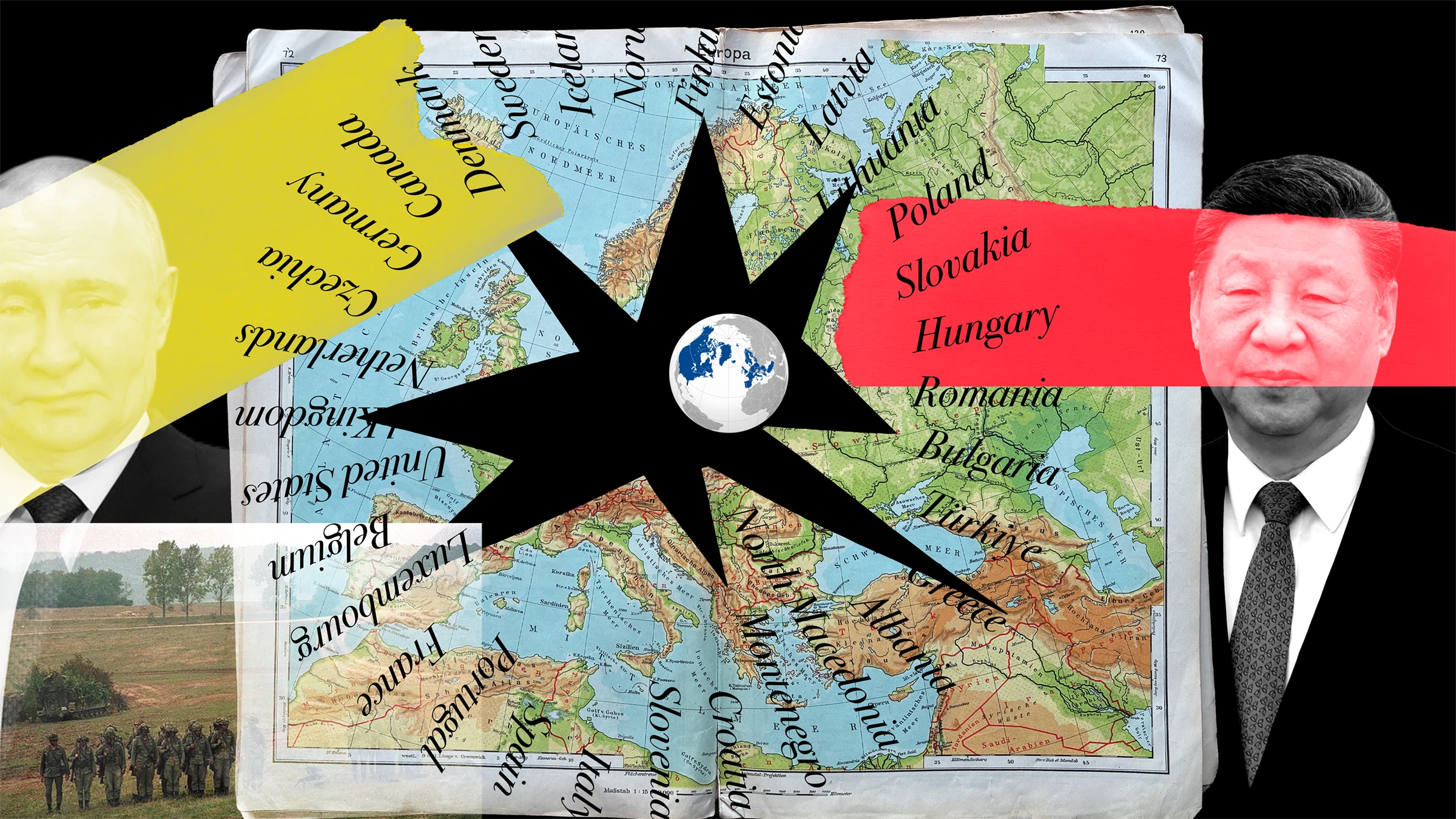
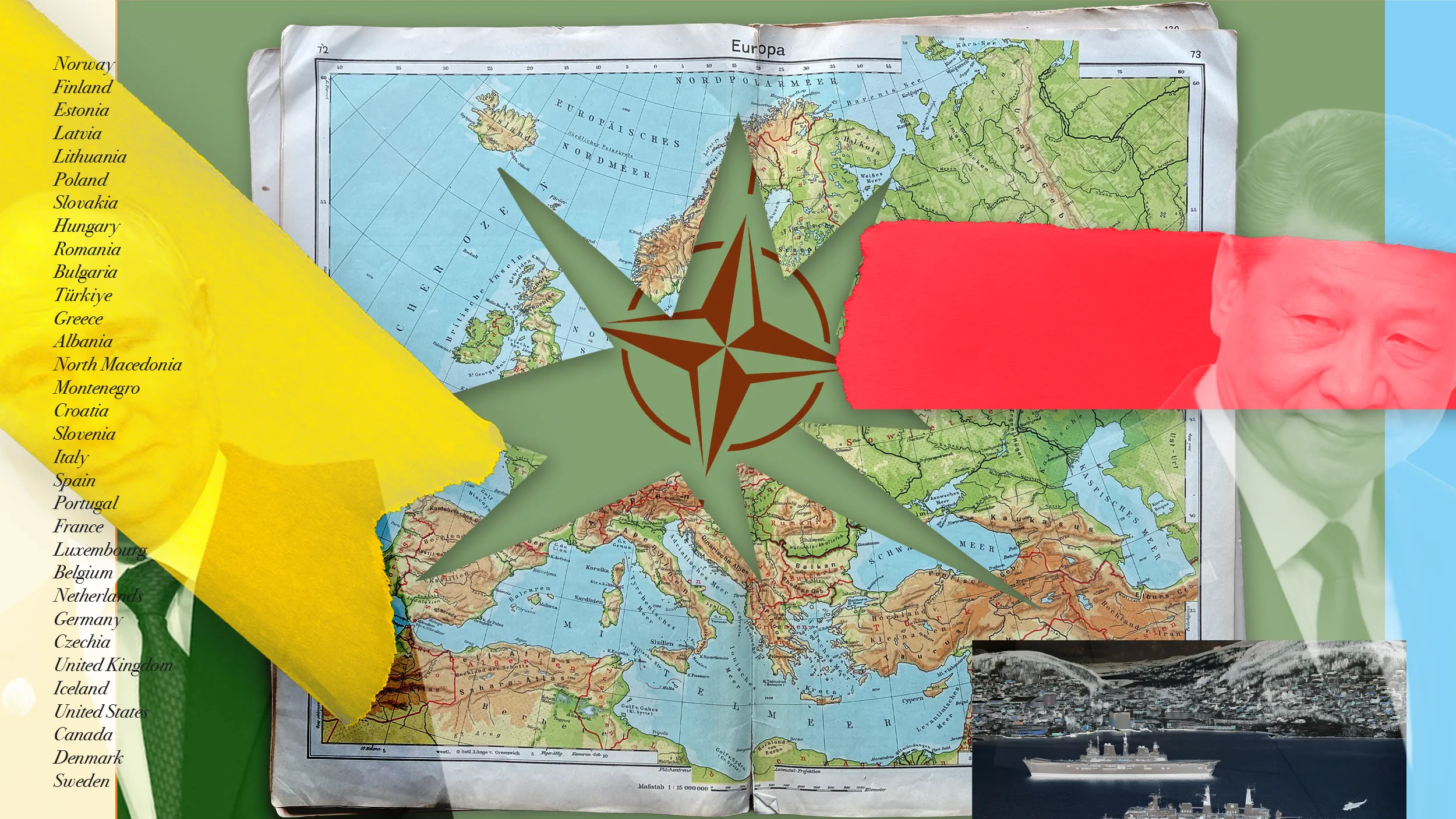
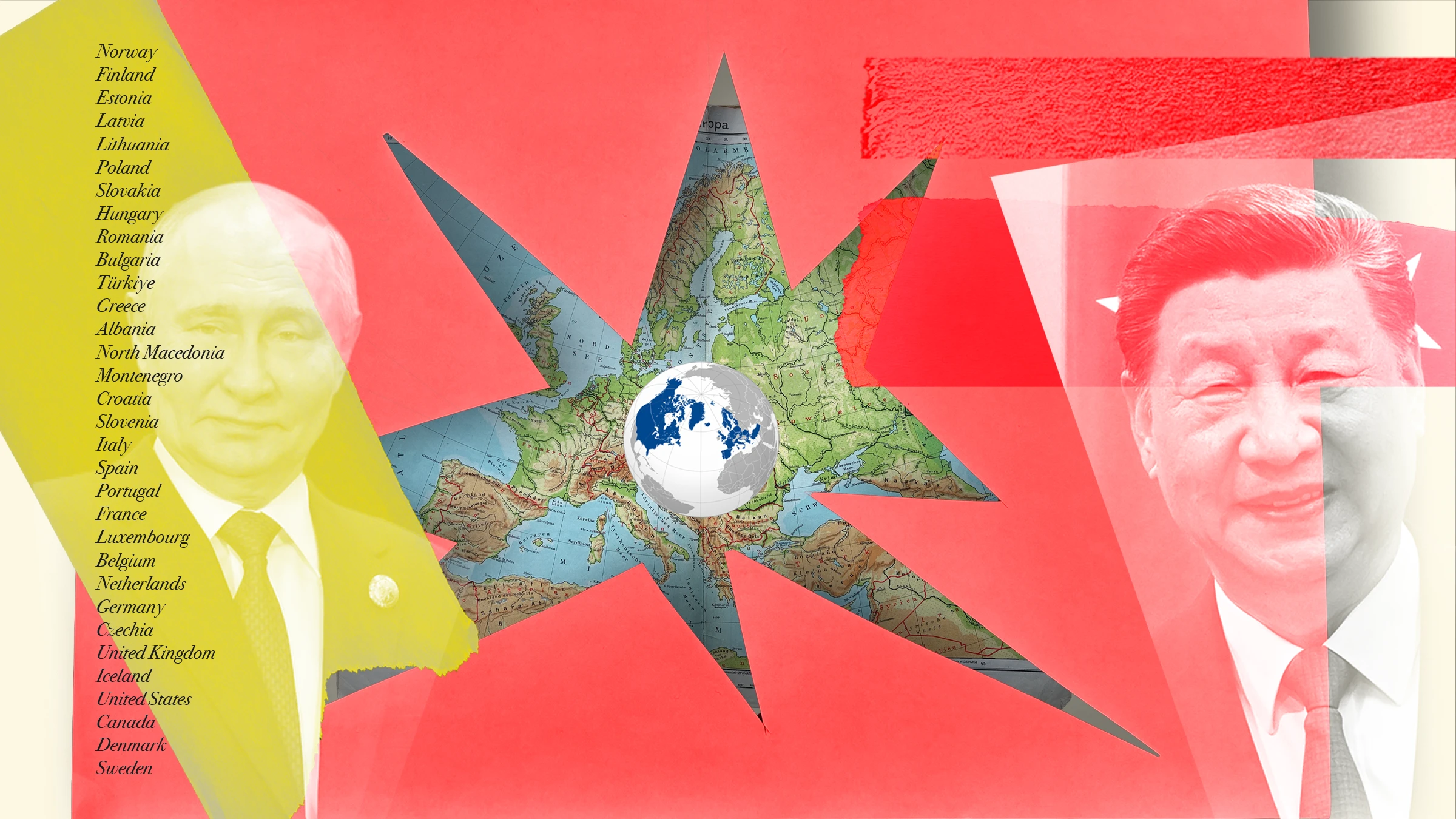
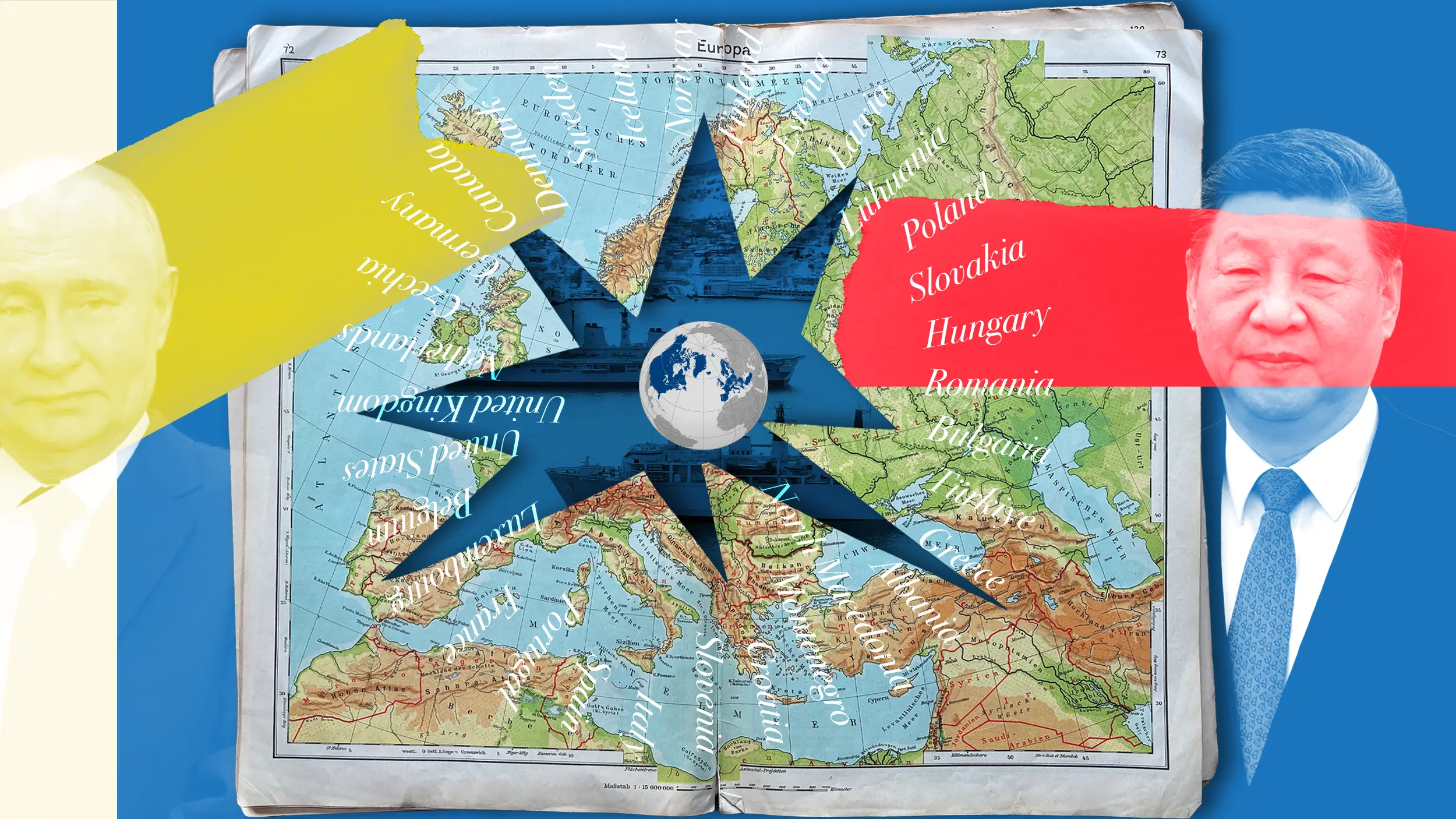
Between the analysis cut-off of 8 April 2026 and 11 May, NATO was materially stronger than at any time since the Cold War and persistently out of internal alignment. Through an Iran-war ceasefire mediated from Islamabad, a Hungarian election, a US troop withdrawal from Germany and bilateral American ceasefire announcements, the technical machinery ran while the consensus table was not the body that decided. The finding is structural: too interlocked to fall apart, too far out of alignment to decide at the speed its environment now sets.
About this Note
This note accompanies a forensic structural analysis of how NATO reaches — and, in several recent cases, no longer reaches — collective decisions. The analysis has an internal cut-off of 8 April 2026 and a recorded observation window through 11 May 2026. The note states the finding in plain language for the press, security-policy practitioners, and the general informed reader. It carries no policy-implications framing; that material is in the assessment.
Available alongside it: the full analysis Consensus as Ceremony (about 115 pages), a Structural Assessment (about 15 pages), and the briefing NATO’s Hidden Failure Mode (about 9 pages).
About DURCHD8
DURCHD8 works where facts, frames, and institutional coherence no longer line up. It reconstructs the conditions, identifies the structural mechanism at work, and states what the evidence supports — without turning analysis into advocacy and without prescribing what anyone should do.
Brussels, Spring 2026
In the five weeks around 8 April 2026 the North Atlantic Council met on its ordinary schedule, issued its communiqués and ran its exercises, and was not the body that took the period’s decisions.
The record of those weeks is short and can be checked date by date. On 7 April an American president set, and then lifted, a deadline in a confrontation with Iran; the ceasefire that followed was carried by mediators in Islamabad, through no alliance channel. On 12 April a Hungarian opposition won 141 of 199 seats on a 79.56 percent turnout. In mid-April the Slovak foreign ministry publicly disputed that the European Union’s twentieth Russia-sanctions package had been adopted. On 1 May the United States withdrew about five thousand troops from Germany and suspended a long-range fires battalion. On 4 May the Ukrainian president stated publicly that Washington had communicated with Moscow over a 9 May ceasefire without a parallel exchange with Kyiv. On 8 May, and again from 9 to 11 May, American ceasefire announcements were made bilaterally on a private commercial platform. Through all of it the Council met, and was not the venue at which any of these things was decided.
The finding of the full analysis is not that the alliance is weak. By every material measure it is stronger in 2026 than at any point since the Cold War: more members, more standardised forces, more money committed. The finding is that strength and alignment have come apart. Earlier ruptures — over Suez, over Iraq — were disagreements inside a frame all sides still shared; here it is the frame itself that has gone out of register. The alliance is at once too interlocked to fall apart and too far out of internal alignment to decide at the speed its environment now sets. Where decisions were taken in this period, they were taken away from the table at which the alliance is built to take them.
Why the Two Come Apart
The reason is structural, and it has three parts.
First, the alliance runs on three accounts of itself that no longer match. What it says it is — a community of democratic equals deciding by consensus — is the declared account. How it actually runs — on a hierarchy with the United States at the centre — is the operating account. What its European members still plan around — a reliable American guarantee — is the assumed account. In December 2025 the United States’ own strategy document placed that assumed account in question. Three accounts can coexist on paper for years; they cannot all be acted on at once.
Second, the machinery that keeps the alliance intact is the same machinery that keeps it from adapting. The common standards, the four-year planning cycle, the assistance package: this is what has carried NATO for seventy-six years, and it runs on a clock measured in years. Several of this period’s decisive moves ran on a clock measured in days. The mismatch is in the clocks. It is not a question of any government’s resolve.
Third, part of the load now sits elsewhere in Brussels. The European Union runs defence instruments on its own legal track, by its own majorities, at its own tempo — joint borrowing, an industrial programme, a procurement route opened under a treaty article that does not require unanimity. This is not a smaller copy of the alliance’s problem in another shell. It is a separate machine carrying part of the same weight under different rules; when one machine stalls, the weight does not transfer cleanly, because the rules do not line up.
One event in the window did close a gap, and it shows where adjustment now happens. The Hungarian election moved a member state’s alignment along an axis the alliance had not closed through its own institutional path; it happened at a ballot box, not at the table. It is one case, and how often that route is open is not known.
What Would Show This Wrong
A structural description earns its standing by naming what would refute it, not by predicting what comes next. Four developments, had any one occurred in the observed window, would have shown this description to be wrong: a European command formed under German and French lead without American conditions; a formal Article 4 consultation convened on the Iran confrontation; a Ukraine negotiation conducted under alliance leadership; the Visegrád group reconverging on a common Atlantic position. None occurred. A reader who can point to one has found the boundary of the claim, which is where it should be tested.
The alliance is too interlocked to fall apart and too far out of alignment to decide at the speed its environment now sets. It remains the reference every member returns to. In the spring of 2026 it was not the place where the decisions were made.
What this Note Does Not Claim
This is a structural description, and its limits are part of it.
It does not say the alliance is collapsing, or will. The opposite is stated above: the alliance is materially stronger than at any point since the Cold War, and structurally interlocked.
It does not predict any outcome, name any winner, or forecast a breakup.
It does not attribute the events of the window to any single actor’s plan or campaign, and it does not claim that any state arranged or coordinated them. It records what happened and where the decision was taken; it does not assign intent.
It recommends nothing — no policy, no command structure, no reform. It describes how decisions are reached, not the motives of those reaching them, and it passes no judgement on whether any government acted rightly.
Every dated fact above stands on the public record and is meant to be checked. What this note adds is the structural reading, not the facts.
A Note on Reading This in Public
A note that circulates is part of the situation it describes. This one takes no side and prescribes nothing, but it is not without effect: an account of an alliance losing the ability to decide together is read inside that alliance, and can be quoted in pieces by people it neither names nor speaks for. That is a property of work of this kind, not a defect in it, and the companion analyses carry the same property. The finding stands as written. Trimming it to manage how it travels would itself be a decision taken away from the table — the move this note describes the alliance making — and would confirm the mechanism rather than escape it.
Where this Analysis Comes From
This note draws on a longer forensic analysis that works through the alliance’s collective decision-making point by point and shows where the process no longer closes. The method on which that analysis rests is set out in a separate, openly published proof; the reference is in the provenance note below.
Provenance
The forensic method underlying the full analysis is published as Durable Coordinated Power (Zenodo, DOI 10.5281/zenodo.20267055, first published 23 February 2026).1 The circulating analysis was sealed under DURCHD8 cryptographic provenance on 14 April 2026 at 11:43:13 UTC and deposited at Zenodo (DOI 10.5281/zenodo.20107107), independently verifiable at durchd8.com/.well-known/pki/.2 The seal records internal continuity, not third-party priority; a reader who sets it aside still has the published proof, the analysis, and the dated post-cut-off record.
Consensus as Ceremony (full analysis), the assessment, the briefing NATO’s Hidden Failure Mode, and this note: durchd8.com. Contact: ed.8dhcrud@ofni.
Companion Documents
Essay — A readable analytical article framing the subject, context, and significance.
Briefing — The decision-maker’s version: key findings, implications, and operational relevance.
Assessment — A concentrated analytical diagnosis for readers who need the argument.
Architectural Analysis — The complete scientific analysis.