
Flagship Companion Public Note
Poland:
Two States,
One Republic
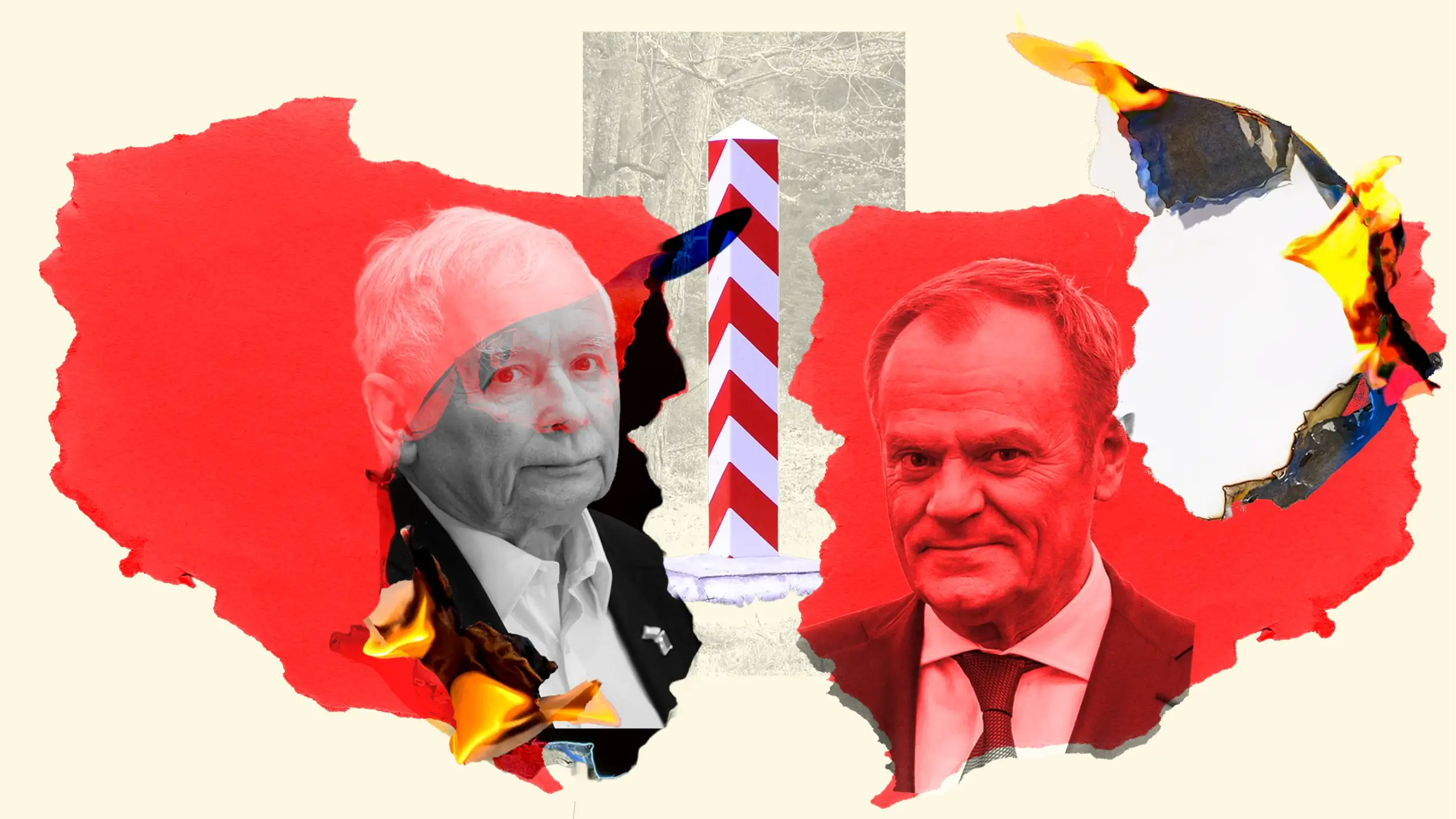
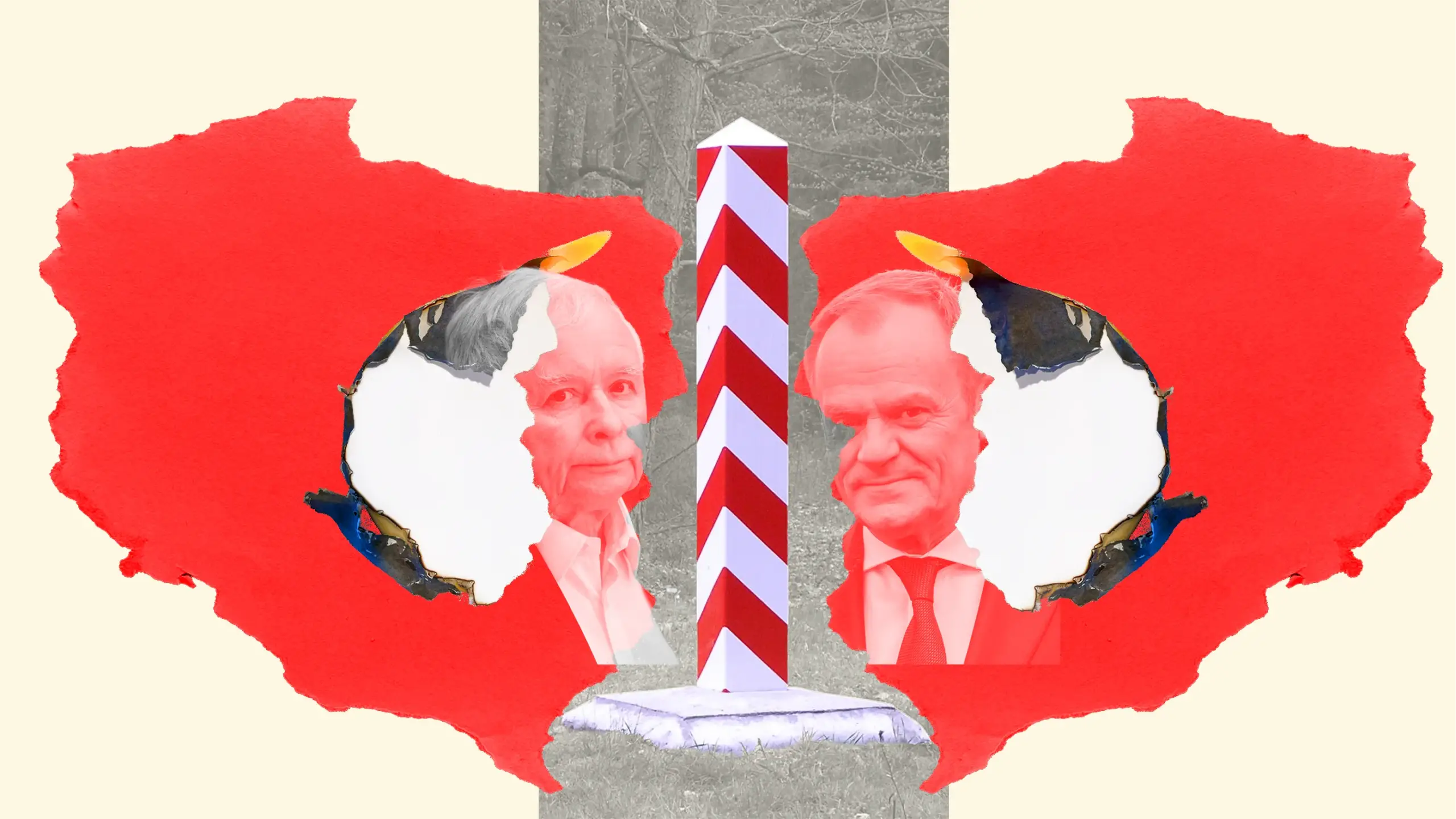
Two democratically elected branches of the Polish state no longer recognise each other’s acts; the state keeps functioning by working around the blockage. The Tribunal-mandate dates of 28 June and 18 September 2026 are the next points on the public record at which the arrangement is tested.
About this Note
This is a public note accompanying the full forensic analysis Poland: Two States, One Republic / Forensic Analysis (DURCHD8-POL-2026-001, cut-off 10 May 2026, 124 pages) and its companions: a Structural Assessment (12 pages) reading the same pattern across the institutional tracks and the spring 2026 sequence, and a Strategic Briefing (9 pages) addressed to decision-makers in the European Commission and Council, the capitals of the Weimar Triangle, and NATO eastern-flank planning. It presents the analysis in non-technical language for press, security-policy practitioners, and the general informed reader. It does not carry the policy-implications framing held in the assessment.
About DURCHD8
DURCHD8 works where facts, frames, and institutional coherence no longer align. We reconstruct conditions, identify structural mechanisms, and turn contested evidence into decision-ready clarity without collapsing analysis into advocacy.
Warsaw, Spring 2026: A Republic Running on Two Authorities
On 8 May 2026, in Brussels, Poland became the first member state to close its contract under the European Union’s €43.7 billion SAFE defence-credit line. Eight weeks earlier the President of the Republic had vetoed the law authorising it. The Council of Ministers signed the agreement by extraordinary cabinet resolution. A state that could not legislate the instrument used it — by routing the decision around the branch that had blocked it. That route, repeated across four tracks of the Polish state, is what this note describes.
The pattern has a plain name: the state keeps producing valid acts by working around its own blockage. It does not stall, and it does not resolve. Each branch continues to issue acts the other does not recognise; the day-to-day Republic runs on whichever channel stays open. The claim of this note is narrow and structural: by 10 May 2026 two democratically elected authorities — the parliamentary government under Donald Tusk and the presidency of Karol Nawrocki — operate Poland in parallel, neither able to settle the dispute, both able to prevent the other from settling it. The support for the claim is a set of dated, individually checkable facts. The condition that would falsify it — one branch recognising the other’s acts, or an exit channel opening — had not occurred by the cut-off.
The Tribunal. In March the Sejm elected six new judges to the Constitutional Tribunal. The President swore in two and refused four. On 9 April the four took their oath before a notary in the Sejm and were barred by the Tribunal leadership from the bench, the files, and the building. On 6 May the European Court of Human Rights in Strasbourg, asked to settle the bench composition, ordered Poland to admit them; the Tribunal leadership refused the order as non-binding, and the Council of Europe’s standard non-compliance procedure now runs in the background. The substantive case continues on Strasbourg’s published calendar. The order stops, for now, at the Polish doorway.
Defence financing. On 12 March the President vetoed the law letting Poland draw on the SAFE credit line. The cabinet signed the agreement by extraordinary resolution; on 8 May the contract closed; the first tranche of €6.5 billion sits on the Commission’s financial calendar, routed through Poland’s national development bank into the Armed Forces Support Fund. Asked whether the cabinet route counts as a binding substitute for the vetoed law, the Commission chose to operate it and to return to the question later. The country drawing the credit is the country whose eastern rail crossing at Małaszewicze meets Belarus and whose north meets Kaliningrad through the Suwałki gap. The financing answers a geography, and it answers it through the workaround.
The Warsaw axis. On 12 April Péter Magyar’s party won Hungary’s election; his first foreign visit as incoming prime minister, on 9 May, was to Warsaw, alongside Tusk. Within four weeks the regional configuration that bore on the presidential bloc’s European posture had shifted. The realignment is a fact on the record; the note draws no inference about intent from it.
The services. On 6 May the internal security agency, ABW, reported counter-espionage investigations up one hundred twenty-eight per cent year on year. One hundred thirty-six promotion files for intelligence officers, blocked by the President since November 2025, remained unsigned; the long-running Pegasus oversight inquiry was moving toward charges against the previous heads of two services. Each branch holds part of the apparatus the other needs. The blockage runs through the security services at the moment external operational pressure on Polish targets is at its highest since the Cold War.
What holds it together is what cannot resolve it.
The arrangement is stable in the narrow sense that it produces outputs: budgets move, the border is held, EU funds disburse, the alliance commitments operate. That stability is the mechanism, not its absence. By routing each blocked decision around the branch that blocked it, the state removes the cost that would otherwise force a settlement. The workaround is what keeps the Republic running and what keeps the dispute from closing. The two are the same fact read from two sides.
The two sides are not equivalent. One branch can still act — defence financing closes, the forces are funded, the border and the alliance commitments hold — because the executive carries the capacity to produce outcomes; the other branch cannot produce outcomes, only withhold recognition. That asymmetry is why the state does not seize up, and equally why it cannot settle: the side that can act does so by routes that lie outside the order the other side controls, and the side that controls that order can deny those routes but not replace them. Operational and financial capacity is not what is in question; what is unresolved is whose acts count.
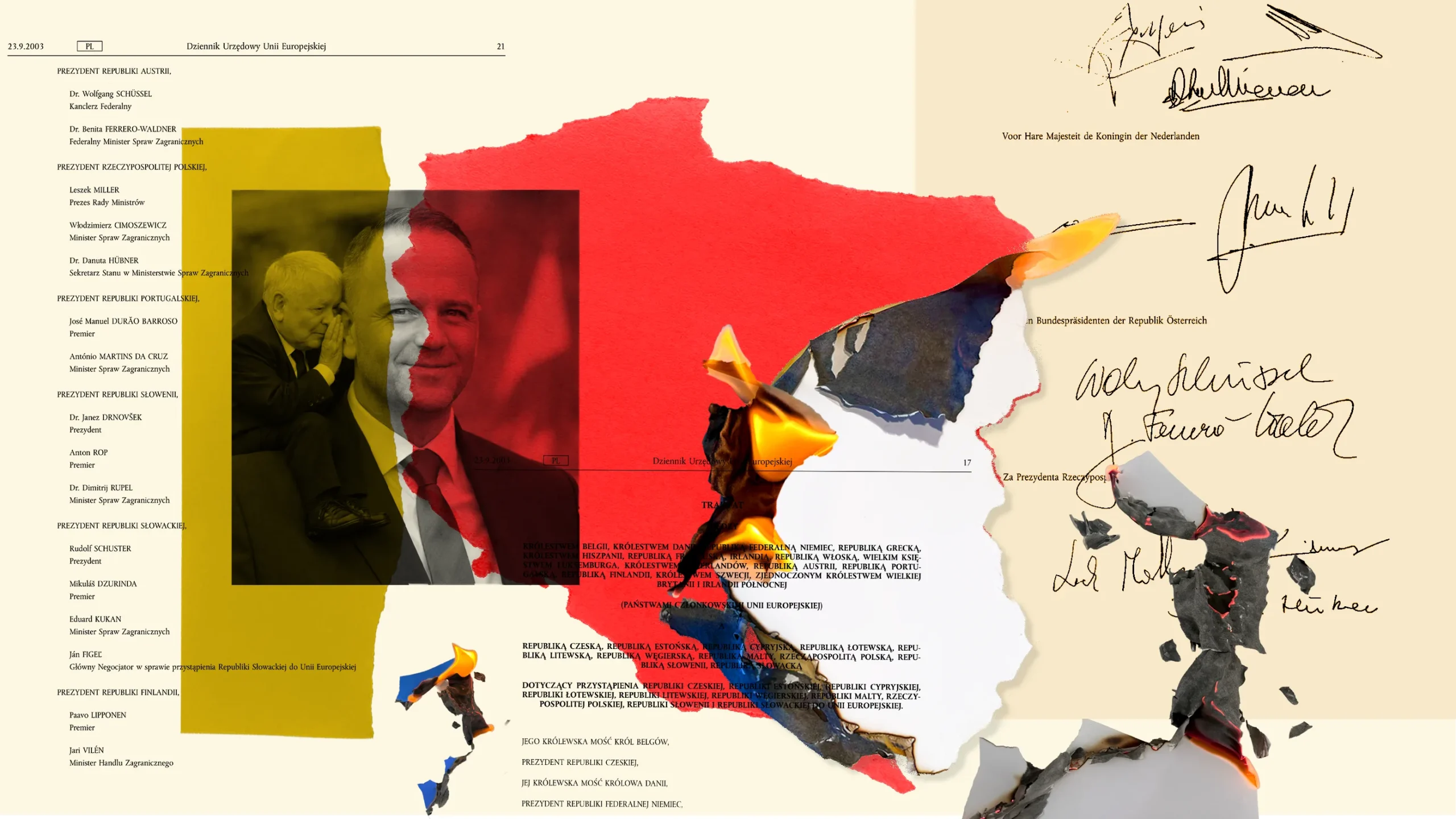
This sits inside an order built for a milder version of the problem. The Round Table settlement of 1989 produced an executive shared between a parliamentary government and a directly elected president; three external anchors followed — the Council of Europe in 1991, NATO in 1999, the European Union in 2004. That order was built to absorb cohabitation: a government and a president of different camps, contesting policy through institutions both recognise. It was not built for a cohabitation in which each pole denies the other’s authority while both keep issuing valid acts of state. That is the difference 2026 has produced, and it is structural, not a matter of personalities.
What this is, and what it is not.
Poland is not leaving the European Union. Roughly two thirds of its citizens affirm membership; no exit mechanism is on any table; treaty obligations operate and funds disburse. It is also not Brexit. Brexit ran through a designed exit channel under a single domestic order. Poland has two domestic orders running side by side and no exit door at all. Those are different problems, and conflating them misreads this one.
One element is new. The European institutions, asked to choose between treating the cabinet workarounds as binding substitutes and refusing them, have for now operated them; the Strasbourg court, asked to settle a national constitutional bench, has issued an interim order of a kind with few precedents. Brussels and Strasbourg are no longer outside the Polish dispute. They are inside its legal architecture. The note records the shift and attributes no motive to it.
The next test is on the calendar.
On 28 June 2026 the nine-year mandate of one Tribunal judge expires; on 18 September a second. The Tribunal’s full bench requires eleven judges for constitutional review and for the presidential pre-promulgation cases stacked since March. The mandate dates are on the public record. Whether each branch accepts replacements administered by the other, and whether the Tribunal accepts its own depletion, is the next observable test. It is also the falsifier in plain form: recognition at either point would mean the description in this note no longer holds; continued non-recognition would mean it does.
Two readings remain open and will be tested side by side. In one, Poland shows that an elected democracy keeps functioning under split conditions: elections compete, no exit is sought, the channels deliver. In the other, the same facts trace an erosion that standard categories of regime classification do not yet name. Both are tenable on the evidence to 10 May 2026. Which one the calendar writes into the record is not yet decided.
What this note does not claim
This note states a structure, not a verdict. It does not attribute intent, coordination, or bad faith to the government, the presidency, the Tribunal leadership, the European institutions, or any external actor. It does not claim Poland is leaving the European Union or that any institution will or should act in a particular way. It makes no prediction about which of the two readings prevails, recommends no policy, and judges neither elected branch against the other. It takes no position on the competence of either branch: operational and financial capacity is not what is in question — what is unresolved is whose acts count. Every dated fact above is individually checkable; the structural reading is the only claim, and it is bounded by the 10 May 2026 cut-off.
A note on reading this in public
This note is itself read inside the situation it describes. A structural account of a state that runs on two authorities can be lifted by either side of that division: by those for whom the state still delivers reads as vindication, and by those for whom the state has failed — or Brussels now decides in Warsaw — reads as indictment; and by market or external commentary that needs one sentence. None of those is what the note asserts, and each is a foreseeable use of this kind of account rather than a fault in it. For that reason the finding is set down once and not adjusted to its likely reception. A diagnosis trimmed to manage how it would be quoted would not have described the mechanism at issue — a state managing recognition by working around it — it would have performed it. The cut-off holds; the structure stated here is the claim, and it stands as written.
Provenance & References
The proof on which this analysis rests is openly published at Zenodo: Durable Coordinated Power (DOI 10.5281/zenodo.18745256, 23 February 2026). The full forensic analysis (DURCHD8-POL-2026-001, 124 pages, cut-off 10 May 2026), the structural assessment, the strategic briefing, and this public note are available on request.
Contact: ed.8dhcrud@ofnidurchd8.com
Companion Documents
Essay — A readable analytical article framing the subject, context, and significance.
Briefing — The decision-maker’s version: key findings, implications, and operational relevance.
Assessment — A concentrated analytical diagnosis for readers who need the argument.
Architectural Analysis — The complete scientific analysis.