Illustration: © Sabine Mescher
Academia · Civil & NGOs · Corporate · Institutions · Intergov · Media · Non-State · States
European Union
In Luxembourg on 12 October 2026 the Union’s foreign ministers put nearly 1,600 more Russian firms and people under sanctions, the largest single step since the war began. A reporter asked whether agreement was getting harder. “It is not true,” said the High Representative, Kaja Kallas. “We showed unity today.” The Union DURCHD8 has studied keeps money and decisions moving, by majority where it can and by detour where it must.

Current State
As of 18 October 2026. The Union now raises more money for Europe's defence and more pressure on Russia than at any time since 2022, and its pace is still set by whichever government holds out longest. SAFE, the €150 billion loan instrument of the Readiness 2030 plan, paid Poland €6.6 billion on 29 May, and by the end of August eight members on the eastern and southern flanks had received first payments.
Enlargement shows the price of each step. On 13 October the Union opened two more negotiating clusters with Ukraine and Moldova, on the internal market and on competitiveness. Budapest's new government had held them up since July, until Kyiv passed a law on schooling for minorities on 12 October. Four of Ukraine's six clusters are now open.
On 16 October the European Council left Ukraine's money for 2027 open. Its conclusions promise to “revert to the issue in a timely manner”. Bulgaria's request made it in: the leaders call attacks on civilian ships in Bulgarian and Romanian waters “unacceptable” and want safe passage in the Black Sea restored at once. For the budget of 2028 to 2034, which needs every government, they want a deal this year, so that EU money reaches its recipients without a break in January 2028. That deadline is the next measure of how far twenty-seven governments will go together.
Mechanism
The Union acts at the speed its rules allow. Where a qualified majority suffices, it now lends at scale: SAFE rests on Article 122 of the treaty, a route that, as DURCHD8’s study of the European defence plan notes, escapes the unanimity binding both NATO and the Union’s own foreign policy. Where unanimity rules, one government can hold a file until it gets what it asks for. Inside a member state the Union meets a third limit.
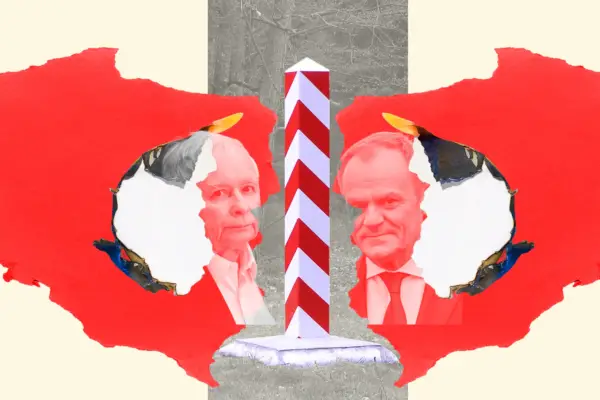
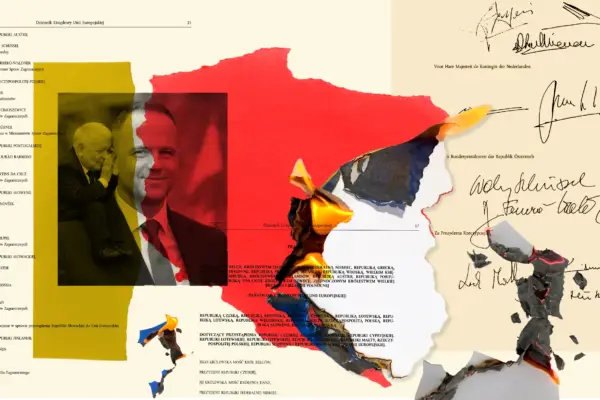
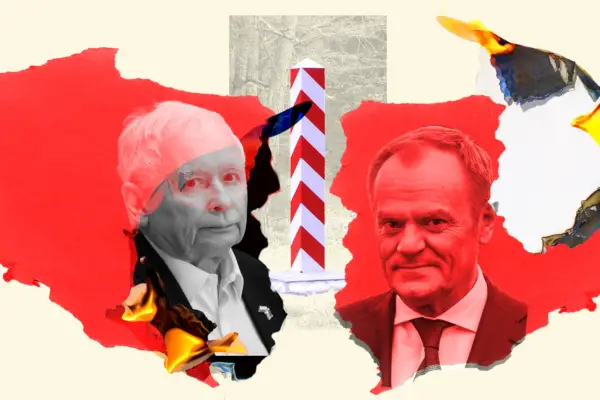
Poland shows it. On 8 May two commissioners signed a €43.7 billion defence loan with a government whose president had vetoed the law behind it eight weeks earlier. The same loan was a “generational investment” to the government and a “debt trap” to the president, whose veto declared that “security with conditions is not security”. DURCHD8’s Poland study finds that voters value the Union for protection, money and the market and increasingly reject its authority over law. The role they see in it as paymaster and protector gives it standing in Warsaw. Its role as rule-setter is the one they contest, and the workaround that keeps the Polish state running, the study notes, is also what keeps the dispute from closing.
At Stake
Ukraine's financing gap for 2027, beyond the loan, has yet to be closed, and the frozen Russian assets that could close it wait, in Kallas's words, on “sharing the risks between Member States”. Poland's armed forces are financed in part through a loan whose enabling law their president vetoed, and the Commission paid it out before any procedure said whether such a workaround counts as law. The next disputed case will inherit that precedent. Moldova and Ukraine move towards membership only when every government agrees, and each can attach a condition, as Budapest did with a school law in Kyiv.
Which instrument will decide whether a member government's workaround counts as law, and will it decide before the next payment does?
Political Relations
Twenty-seven governments hold the Union’s foreign and security decisions. Each can stop one. Germany, France and Poland coordinate above the Council in the revived Weimar format, which DURCHD8’s Poland briefing calls the only hard-power channel to Warsaw that the Polish president’s veto cannot reach. Hungary changed government in May and its course on Ukraine in stages. Czechia, Hungary and Slovakia took on no obligations from the €90 billion loan to Ukraine.
The Commission has become a lender at scale and, in Poland, a co-signatory against a presidential veto. Beside the Union, the Council of Europe’s court acts as a second European legal order: in May it ordered Poland to seat four constitutional judges, and the Tribunal’s leadership refused. Norway and Ukraine may join the Union’s new joint defence projects.
Outside, the United States sets terms on tariffs and troops, and its strategy treats Europe at once as partner, vulnerability and field of influence. Russia presses through war and sabotage, and Poland alone accounts for 21 per cent of the Russian sabotage operations documented in Europe. China sends about 90 per cent of its rail freight to the Union through one Polish border crossing, Małaszewicze.
Research
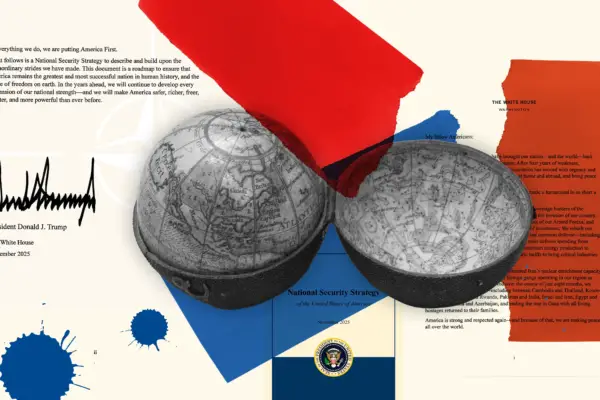
DURCHD8 has followed the Union through five studies in ten months. Reclassified: Europe’s New Position in the 2025 U.S. National Security Strategy read Washington’s strategy of December 2025 as the move of Europe from co-author of the Western order to a partner on conditions. A week later From Capability Substitution to Decision Control asked what that shift demands of European decisions: someone entitled to take them, agreement across the levels that carry them, and the capacity to act before the window closes.
The flagship Poland: Two States, One Republic, with its public note, found the Union inside a member state’s constitutional quarrel. Its finding for Brussels is a missing procedure for judging whether an elected government’s workaround counts as law. In June European Defence Autonomy: A Capable Answer, Wrong Layer examined a plan in which the Union supplies money and legitimacy, and found that its industrial pillar needs powers the Union lacks.
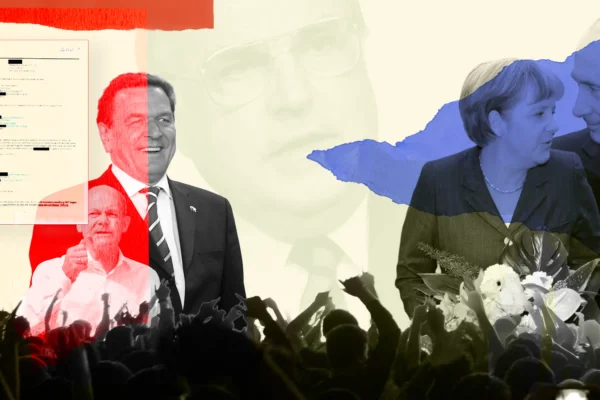
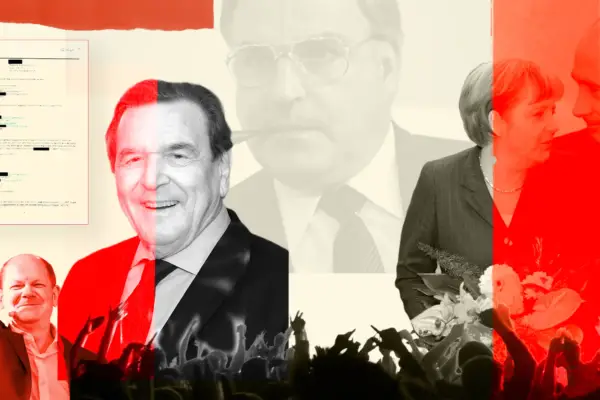
In October Zeitenende: Macht ohne Bedeutung ist bedeutungslos turned to the largest member state. There the parties at the margins grew at the safeguards of European integration, the AfD at the euro in 2013 and at the Dublin system in 2015, and a bloc of that size, the study notes, reaches the Union where the Council decides by unanimity.
Each further SAFE payment to Warsaw is a public, dated test of the precedent the Poland study describes.