
PUBLIC NOTE
Moscow, Late 2025:
A General, A Desk,
A Permitted Voice
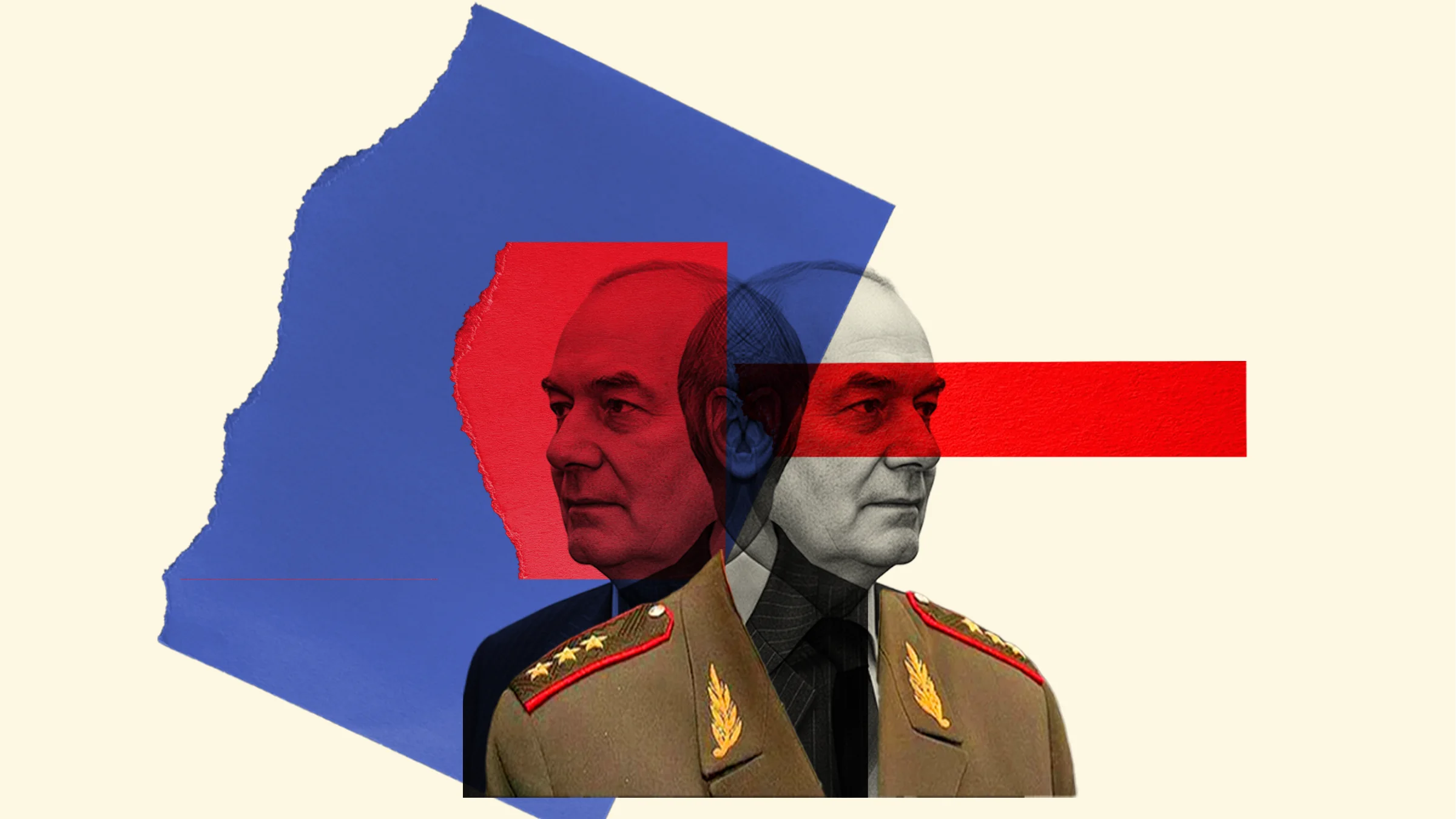
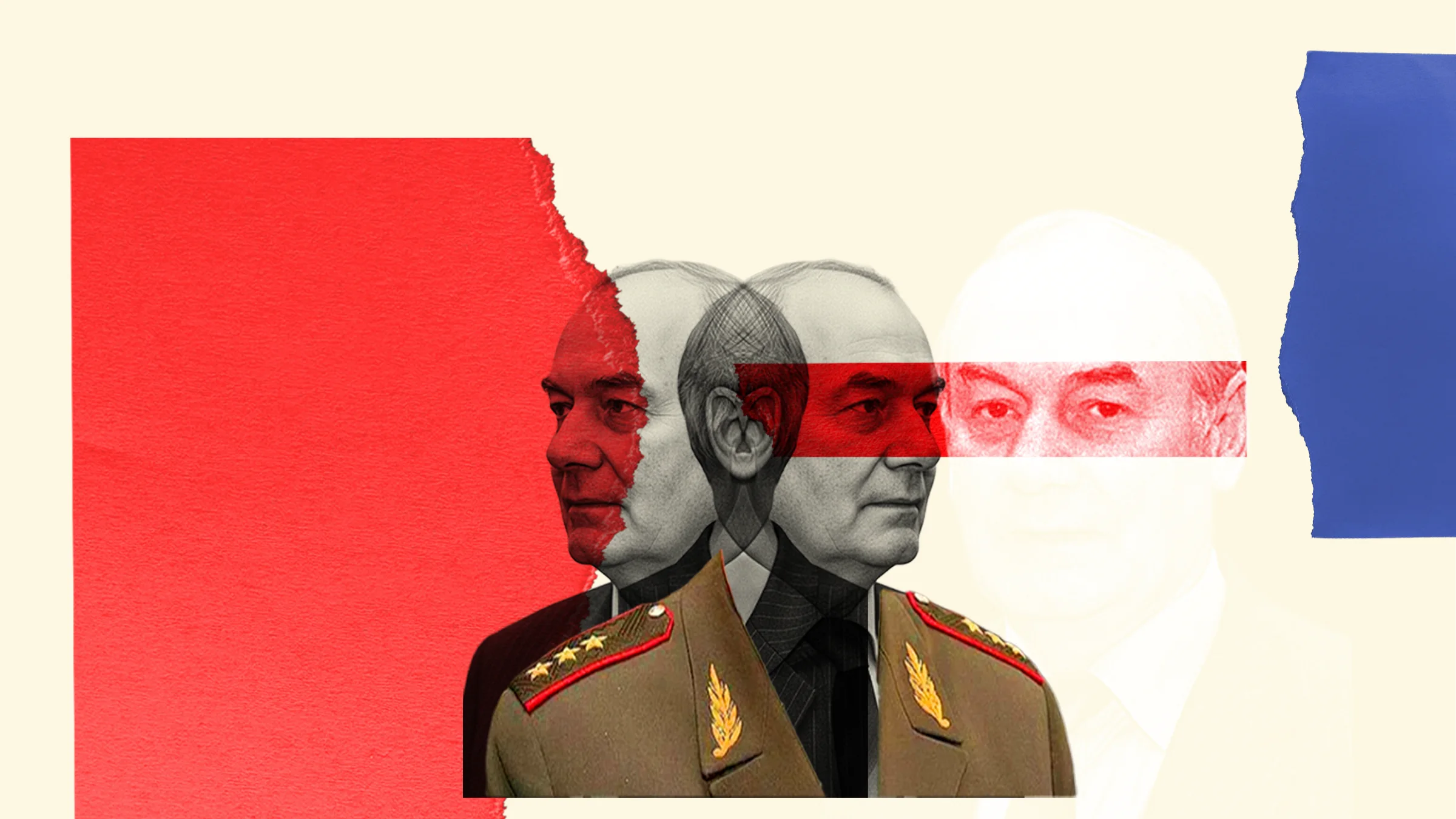
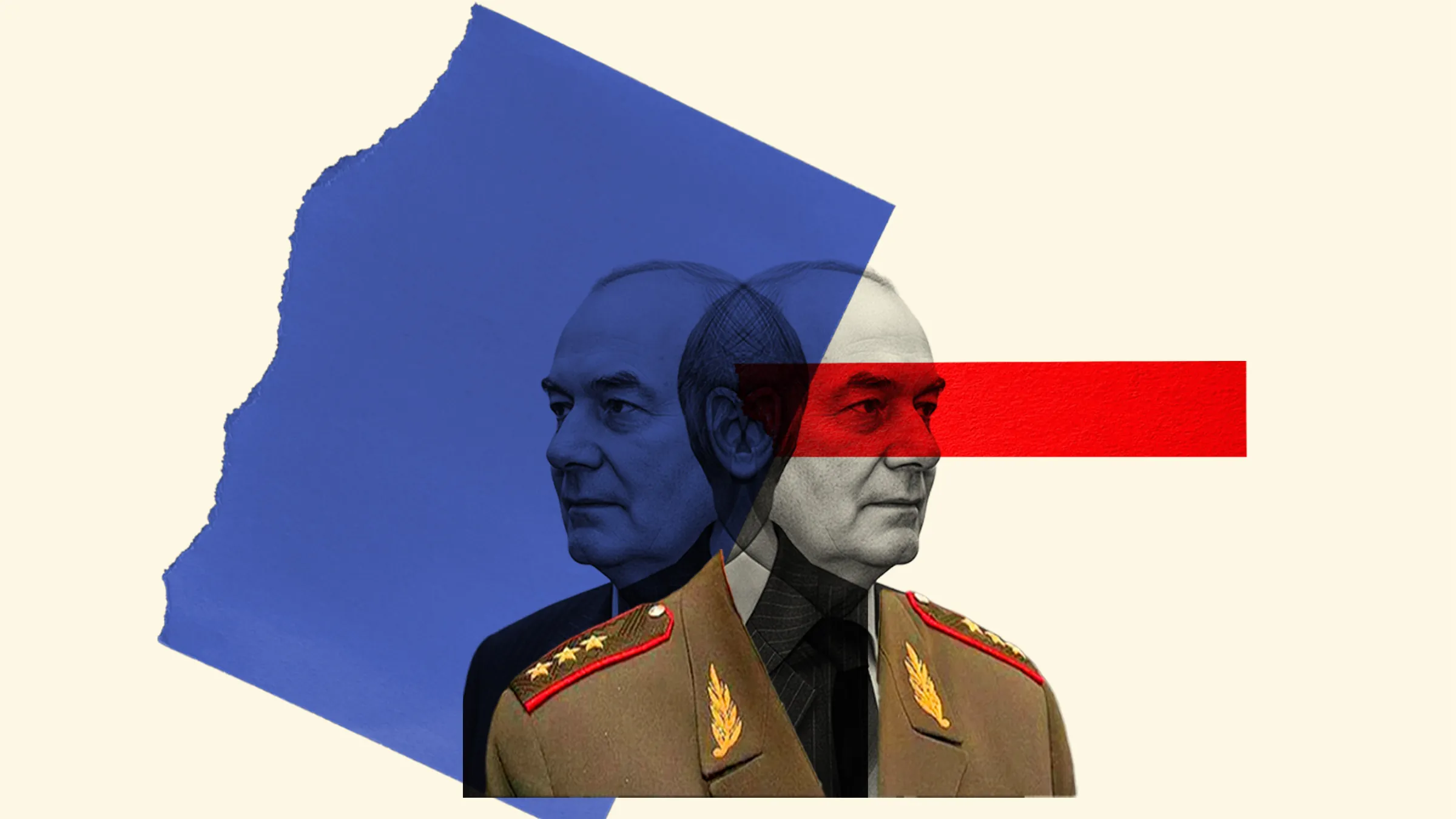
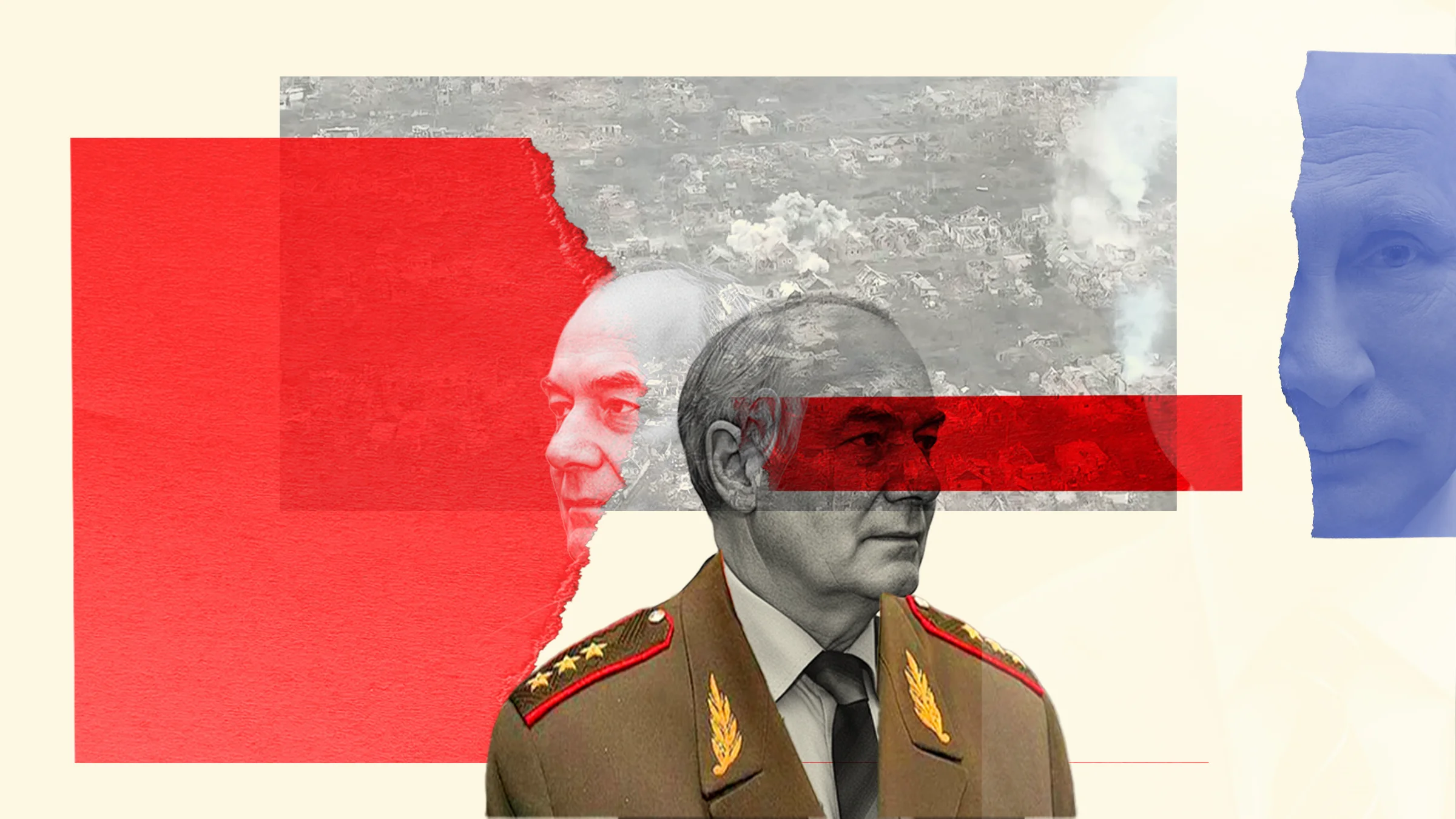
A retired Russian general speaks from a desk in Moscow; the camera does not move and the channel does not stop. The question is not what he means but what the system around him allows. In a state that walls its information space inward and funds a media reach outward, a voice left to persist in a fixed format and to land abroad is, in effect, the message the system chooses to let travel.
About this Note
This is a public note accompanying a forensic structural analysis of the externally-facing communication stream of retired Russian Col-General Leonid Ivashov, with an internal analytical cut-off of 1 January 2026. It presents the analysis in non-technical form for press, security-policy practitioners, and the general informed reader. It does not include the policy-implications framing carried in the assessment or the operational-anchor framing carried in the briefing.
The full forensic analysis (DURCHD8-IVA-2026-001, about 58 pages) and its companions—a Structural Assessment (DURCHD8-IVA-2026-002, about 14 pages), which develops the analytical argument with a mechanism and a falsifier set for each finding, and a Briefing Note (DURCHD8-IVA-2026-003, about 9 pages), which condenses the findings for senior staff—are available alongside this note. Every dated fact in what follows stands on the public record and is meant to be checked.
About DURCHD8
DURCHD8 works where facts, frames, and institutional coherence no longer align. We reconstruct conditions, identify structural mechanisms, and turn contested evidence into decision-ready clarity without collapsing analysis into advocacy.
Moscow, Late 2025: A General, A Desk, A Permitted Voice
In the late autumn of 2025, on a YouTube channel called Geoanaliz and on a Telegram feed named IvashovLG, a retired Russian Col-General sits behind a desk, addresses the camera in a steady expository register, and reads the world for an audience that already half-knows the framing. The desk does not move; the format does not move; the channel does not vanish. Across three years, three platforms, three operational phases of a war, the stream has stayed bounded and persistent. The analytical question is not what the speaker means. The question is what the system around him permits.
Russia in 2025 is not a state that has gone quiet. It is a state that has become architecturally selective. With the Foreign Agents Law of July 2012, the Doctrine of Information Security of December 2016, the Sovereign Internet Law of May 2019, and the platform shutdown of 2023, it closed an inner space step by step. In the same arc, by Presidential Decree No. 894 of 9 December 2013, it built out an outer one: Sputnik in 2014, additional state funding for Russia Today, and the holding Rossiya Segodnya, which bundles both. A wall inward, a window outward, mortared in the same breath. The wall is what makes the window legible: in a state that lets very little out unintended, what does come out is worth reading for what it is allowed to be.
It is into this window that the image of a desk falls.
Behind the desk stand bookshelves in dark wood, packed tight with histories and personal volumes, mixed with mementoes of a long service. The general wears a collared shirt and tie, the formal civilian register of a retired senior officer — no uniform, no epaulets. The camera does not move. The framing is always the same. Anyone who follows the stream for a while knows the order of the books. Sometimes a second man sits across from him in a sweater, who on his own channel introduces himself as a “humble school teacher”; sometimes it is only the general, alone, an hour at a time, in front of the camera of a phone. The format has not changed once across the whole run. That stability is not decoration. It is the first thing the analysis has to explain.
Beneath the stream run traces no state broadcaster would carry: a Bitcoin address beginning “1N9Ajm”, two card-routing numbers for Sberbank and Tinkoff, and — slipped in between sentences about the state of the world — an advertisement for a private clinic called MOZG, anatomical diagram and all. The format has the aesthetic of a remote consultation between acquaintances at a kitchen table. This is how Russian geopolitical analysis sits in the picture in 2025: not state television, not quite a private broadcast either, but something between the two. The in-between is the analytical point, and it is also why the ordinary regulatory category does not fit: a channel carried on donations and recorded in a private study is not a foreign state broadcaster and cannot be treated as one.
What the general says is not soft. On a third-party channel that recuts his sessions under sharper headlines, one runs under the title Russian general’s harsh words to Putin: “You’re not a leader, you are driving country into disaster”.1 He says Russia has failed. He says its science and education have collapsed. He says the one field in which Russia is now “number one” is population decline. He does not say it once. He says it repeatedly, across three channels, across the whole window. He is in his ninth decade, and across that window the channel is never interrupted.
The distance between that desk and what happens to comparable voices is the actual observational material. Igor Strelkov, who had called Putin incompetent in Telegram posts, was arrested on 21 July 2023 and sentenced in January 2024 to four years in a penal colony. Alexei Navalny died on 16 February 2024 in penal colony IK-3, north of the Arctic Circle. Sentences of roughly the register the general broadcasts every week have led others to pretrial detention and a colony. They leave him at his desk untouched. That gap is not atmosphere; it is data.
Put plainly, the reading reduces to one structured claim and the test that would break it. The claim: a voice that says, on the open record, what has sent other Russians to a penal colony, and that is nonetheless allowed to persist in a fixed, bounded format for three years and to land reliably abroad, is a voice the system permits — and in a state that answers exactly these sentences from other people with years in a colony, what is allowed from that desk is, in its effect, the message the system is choosing to let travel. The test that would break it is just as concrete: the reading would be wrong if the general or the studio had been raided, designated under the foreign-agent statute, or prosecuted under the discreditation law and the channel had then stopped; or if senior voices of comparable standing had been silenced uniformly across the same window, which would show the state was not selecting at all. Neither happened before the cut-off. The reading rests on that, and on nothing that requires knowing anyone’s instructions.
The architecture is not new; only its surface is. On 25 September 2001, the same outward-facing register reached the German Bundestag: Vladimir Putin spoke in the Reichstag building, in clear German prose, about cooperation with Europe; the stenographic record is archived as Plenary Protocol 14/188. Applause in the chamber, an open hand reaching west. In the same year, inside the country, the consolidation of television began — the takeover of NTV, the restructuring of ORT. What in 2001 in Berlin was read as rapprochement is, twenty-four years later and in the light of what came between, the early form of the same pairing the stream shows now: a window opened outward while, in the same motion, an inner space is closed. The two do not cancel. One carries the other.
The general at the desk is not the first of his kind. An earlier carrier worked at the KGB-affiliated Novosti Press Agency and sat in the US–Soviet television “spacebridges” of the 1980s, made translatable in unaccented American English: Vladimir Pozner, a habitus and a format. Yevgeny Primakov, an orientalist at the Moscow Institute of World Economy and International Relations, became the first head of the SVR in 1991 and later Foreign Minister — a career that began in the academic apparatus and ended in diplomatic hardware. Georgi Arbatov, at the Institute for US and Canadian Studies, ran the détente-era channel into the American policy elite with the vocabulary of common security. Sergei Karaganov carries the hawkish version of the same type into the present. The Soviet-era name for the line of work these voices perform is plain enough once translated: active measures — influence aimed at decision-makers rather than at the mass public. The current has not been broken. The general at the desk is the latest form in which it has chosen a carrier — a recurring type across different positions and phases, not a baton passed hand to hand.
The material looks contradictory on first reading. Russia: broken, weak, demographically declining. The West: overstretched, in retreat, losing its grip. Both at once, both from the same mouth, week after week. A reader who takes the stream as dissent sees the first half. A reader who takes it as a regime voice sees the second. Both readings miss what the two halves do together. The regime-critical half buys credibility with a Western audience that cannot dismiss as a state spokesman someone who speaks of Putin in this register. The anti-Western half then carries the work: the slow shift of the mood in which decisions are taken in the capitals that read the stream. Negotiation looks more urgent; rearmament looks already late; the next decade is quietly costed shorter. The general calls no one to action and names no one. What the stream shifts is the mood in which decisions are taken in the capitals that read it.
What the analysis points to, said without machinery, is a function sitting somewhere in the system: somewhere voices are sorted by the effect they serve; somewhere expected value is weighed against possible damage; somewhere what is broadcast is allowed; somewhere the option remains to step in if a voice runs off the line. No one needs to attach this to a single person. It can sit in a staff of the Presidential Administration together with the Security Council; it can sit in a narrow circle around the President; it can run as competition between agencies whose overlap is the stream itself. Which of the three the stream does not prove. That one of them is at work, it does.
Comparable arrangements exist elsewhere, at other tempos. In Beijing, the outward-facing line ran for over a decade through the loud nationalist voice of Hu Xijin at the Global Times before his successor Wang Wen took the geo-economic translation work into an academic register for Western interlocutors. In Tehran, an analogous double arrangement operates inside the spectrum the theocracy permits — Mohammad-Javad Larijani at the Iranian Human Rights Council, Hossein Mousavian at Princeton. And across the Cold War, with CIA money and foundation cover, the Congress for Cultural Freedom, the magazine Encounter, the broadcasters Radio Free Europe and Radio Liberty. Standing channels and decade-long covert ones — the same function in different states, at different tempos, in different suits.
At the end the picture is the one it started with: the general, the desk, the books, the broadcast that does not stop. He says the country is lost. He says the West is falling. He says both, and keeps saying both, and the system around him lets him. In a state that has answered the same sentences from other people with years in a penal colony, what that desk is allowed to broadcast is the system’s choice about which words may travel — a statement about what a system of this kind permits, not about who instructed anyone. That is the structural reading this note sets down, and the test that would overturn it stands beside it.
What This Note Does Not Claim
This is a structural reading, and its limits are part of it.
It does not say the Kremlin pays the general, funds the channel, writes his lines, or instructs him what to record. It makes no claim about money, tasking, or a script. It does not name a unit, a directorate, or an officer, and it does not say any office runs the stream.
It does not claim proof of anyone’s private motive, and it does not claim that any particular Western decision followed from any particular recording.
What it says is narrower and harder to wave away: in a state that has answered the same kind of sentences from other people with a penal colony, a voice that is instead left to broadcast, in a fixed format, for years, and to land abroad, is a voice that system permits — and what a tightly controlling system permits, in its effect, is what it is choosing to let travel. That is a statement about a function, not about a chain of command. The reading is functional, not attributional: the question is not who ordered this, but whose words a system of this kind allows to carry.
Every dated fact above stands on the public record and is meant to be checked. What this note adds is the structural reading, not the facts.
A Note on Reading This in Public
A reading of this kind enters the field it describes. The stream works in part because it is received as one independent man’s voice; an analysis that names the class it belongs to changes, a little, how the next recording is heard by anyone who has read it. That is an effect of the work, not a flaw in it, and the longer analyses behind this note carry the same property.
For that reason the finding is set down plainly here and not softened to manage how it will be quoted. It will be quoted in pieces — by people who will read it as proof that every critical Russian voice is staged, and by people who will read it as paranoia about a frail old man at a desk. Neither half-reading is the finding. Trimming the finding in anticipation of either would make this note a voice shaped by its expected reception — precisely the thing it describes the stream as being — and would confirm the mechanism rather than escape it. The reading stands as written, with the test that would break it stated alongside it.
Provenance & References
The forensic method underlying the full analysis is published openly as Durable Coordinated Power (Zenodo, DOI 10.5281/zenodo.18745256, 23 February 2026). The full analysis, the assessment, the briefing, and this note are available under durchd8.com.
Analytical cut-off: 1 January 2026. Companions: DURCHD8-IVA-2026-001 (Architectural Analysis), DURCHD8-IVA-2026-002 (Structural Assessment), DURCHD8-IVA-2026-003 (Briefing Note).
Contact: ed.8dhcrud@ofnidurchd8.com
Companion Documents
Essay — A readable analytical article framing the subject, context, and significance.
Briefing — The decision-maker’s version: key findings, implications, and operational relevance.
Assessment — A concentrated analytical diagnosis for readers who need the argument.
Architectural Analysis — The complete scientific analysis.