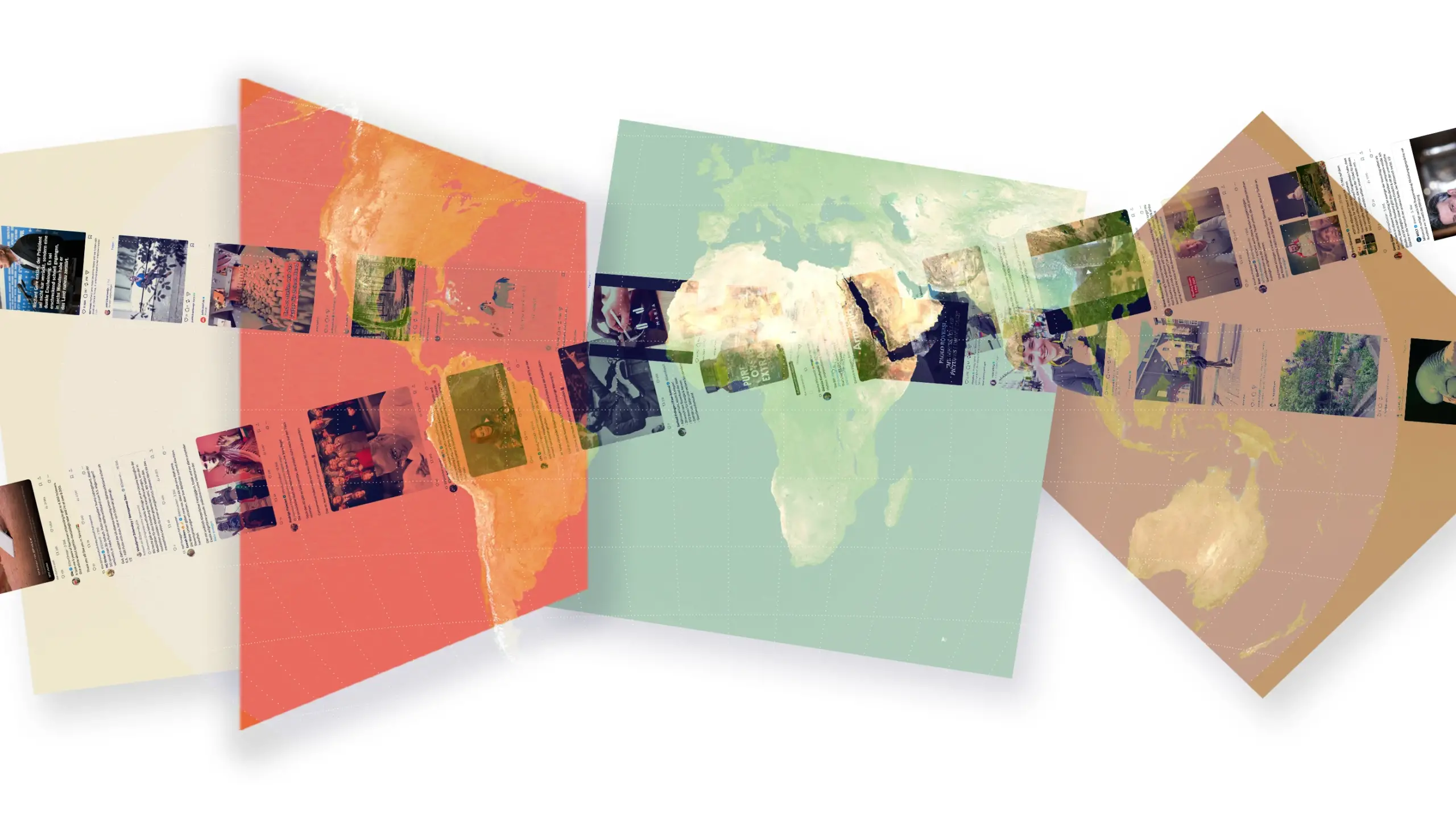
Illustration: © Sabine Mescher
Academia · Civil & NGOs · Corporate · Institutions · Intergov · Media · Non-State · States
Media
Since Bucha, Moscow walls in its media and opens windows abroad, and in the West readers decide how far a story goes.
In spring 2022 the killings at Bucha could be read in the European press and not in the Russian. The reporters who would have filed the story had left the country or sat in pre-trial detention. Novaya Gazeta, Ekho Moskvy and TV Rain were gone within weeks. The record went abroad. In the conflicts DURCHD8 has studied, media are carriers that states open or close, and their readers decide how far a story goes.
No terms found.
Current State
As of 18 October 2026. Russia keeps narrowing what its people can reach, and in Germany this year's campaigns found little echo. Over the year to August the Russian authorities blocked WhatsApp, Telegram and FaceTime, declared Deutsche Welle “undesirable” and added many independent journalists to a register of foreign agents that held 1,227 names by July, Human Rights Watch reported. On 14 October Putin asked his security chiefs, the central bank and Sberbank for proposals that include monitoring Russia's dependence on external platforms. The voices the state allows keep travelling: two talks by the retired general Leonid Ivashov have each drawn more than 200,000 views since August.
In Germany, videos that researchers trace to the Storm-1516 operation alleged postal-vote fraud in all three September state elections, and the federal interior ministry described their spread as almost entirely artificial and without notable resonance. A formal attribution is still missing. On 3 November comes the American midterm election, which RUSI's forecast for 2026 named among the elections where Russian activity would intensify.
Mechanism
States set the frame inside which media reach anyone. Russia closed its inner space step by step, from the foreign agent law of 2012 to the platform blockade of 2023, and by a decree of December 2013 built an outer window: Sputnik in 2014, more money for Russia Today and the holding Rossiya Segodnya that bundles both. DURCHD8’s Ivashov study calls it a wall inward and a window outward. Between the two run carriers that fit neither category. A retired general’s YouTube channel, carried on donations and recorded in a private study, reaches Western readers in three steps, from open-source aggregators on the same day to mainstream analysis about a week later.
Abroad the reader decides what a story becomes. When a Russian drone crossed into Poland in September 2025, RIA and TASS put out a claim within minutes, and citizens sharing from conviction then carried more than 60 per cent of the talk online, bots the minority. When Germany’s domestic intelligence warned of the Storm-1516 operation, right-wing and pro-Russian Telegram channels read the warning as proof that the services hid the truth, and the false claims spread further. In Hungary in April 2026 a network of 1,770 automated accounts met a mobilised electorate and failed to prevent Viktor Orbán’s defeat. Where trust is low, a state’s warning can carry the claim further. Where people mobilise, the effect turns, DURCHD8’s NATO study finds.
At Stake
In Russia a post can cost years. In June a Moscow court gave Maksim Kruglov of Yabloko seven years for two posts, one citing UN figures on civilians killed in Mariupol, the other mentioning Bucha. Open societies are losing the common place where conflicts were sorted before they turned political. ARD and ZDF have fallen from about 80 to about 25 per cent of German viewing in four decades, and younger people form their views on platforms that rank by engagement and outrage, as DURCHD8's Zeitenende study traces. A government's answer travels through the same carriers as the claim it answers.
Which voice can still correct a false story in a divided country without carrying it further, and whom would both camps believe?
Political Relations
No dossier or study is filed under media yet, and media run through DURCHD8’s pages on both sides of the contest. The Russia dossier and the case on Russia’s information governance show state broadcasting under Rossiya Segodnya, the regulator Roskomnadzor and platforms that comply or are blocked: by April Apple was still removing VPN apps at Roskomnadzor’s demand almost every month, and WhatsApp called the state messenger Max a surveillance app. The Ivashov case follows one permitted voice on YouTube and Telegram, recut by other channels under sharper titles. In the Poland dossier and case, sovereigntist outlets and a journalist turned YouTuber appear among the domestic voices that Russian campaigns amplify, knowingly or not, and the president vetoed the law that would have applied the EU’s Digital Services Act. The Germany dossier and the Zeitenende case show public broadcasting losing its central place.
DURCHD8’s Ivashov study sets Russia’s permitted voices beside Radio Free Europe and Radio Liberty, which Washington funded through the Cold War.
Research
DURCHD8 has studied media as carriers inside larger cases. Russia’s Information Domain as a Governed Power Function places state broadcasting among the carriers of Russia’s information power, and its public note Russia Governs Information as a State Function tells how the independent press and the record of Bucha were silenced under one set of laws. Ivashov: Signal Within a Governed Information Environment follows a single YouTube channel and the speed at which it reaches Western readers. NATO Consensus as Ceremony traces the Storm-1516 operation through more than 290 fabricated news sites and about 244 million views on X in 2025, and shows where a state’s warning feeds the claim it warns against. Poland: Two States, One Republic measures who carried the talk after the drone of September 2025 and names a chain of five steps, from a foreign impulse to a government with less room to compromise. Zeitenende: Macht ohne Bedeutung ist bedeutungslos follows German public broadcasting from the centre of attention to its edge.
Each of those measures can be taken again on the next campaign: who carried the story, how fast, and whether the correction travelled further than the claim.
Featured Disclosures
Essay — A readable analytical article framing the subject, context, and significance.
Briefing — The decision-maker’s version: key findings, implications, and operational relevance.
Assessment — A concentrated analytical diagnosis for readers who need the argument.
Architectural Analysis — The complete scientific analysis.