Illustration: © Sabine Mescher
Hungary · China · NATO · Russia · United States · European Union · Poland · United Kingdom
Hungary
On 7 April 2026 the American vice-president told a full stadium in Budapest: “We have got to get Viktor Orbán re-elected.” Five days later about 79 per cent of the electorate voted, the highest turnout since 1990, and gave Péter Magyar’s Tisza 141 of 199 seats. “Hungarian history will not be written in Washington, Moscow, or Brussels,” Magyar said. DURCHD8’s NATO study reads the turn as a repair the alliance gains from and cannot make itself.
Current State
As of 18 October 2026. Budapest has moved from blocking to bargaining. It gives its consent, with conditions of its own, and the money frozen under its predecessor is coming back. Magyar was sworn in on 9 May and governs with a two-thirds majority. In June his government let Ukraine's accession talks begin, which Orbán had vetoed for two years. On 13 October the EU opened the next two groups of negotiating chapters with Budapest's consent, a day after Kyiv passed and signed a law on schooling for national minorities. In August Magyar signed guidelines that call Russia's behaviour a threat to Hungary, Europe and the global order.
On the same 13 October the Council lifted the budget measures of 2022. That releases 4.2 billion euros in cohesion funds and restores full access to Erasmus+ and Horizon Europe. Hungary joined the European Public Prosecutor's Office in July as its 25th member. Energy still ties it to Russia. Independent data show the share of Russian gas in its imports rising, and the government has promised to decide this year whether it still needs Paks II, the Russian-built reactors whose construction began in February.
Mechanism
In the EU a single government can stop the other twenty-six, and in NATO one ally can hold up thirty-one. Orbán’s Hungary used that position for years. With Turkey it kept Sweden waiting more than 600 days to join the alliance, and with Slovakia it blocked the EU’s 20th sanctions package in February 2026, DURCHD8’s NATO study records. The study counts Hungary’s veto, like Turkey’s Bosporus, among the assets that outweighed the alliance’s values.
At the rally Vance saw a nation defending its sovereignty against “faceless bureaucrats in far away countries”. The Council had seen breaches of the rule of law that endangered the EU’s money, and in 2022 it suspended funds. Budapest got both, backing from Washington and a freeze from Brussels.
Russian operations targeted the vote as well, with a plan by the foreign intelligence service to stage a fake attempt on Orbán’s life and with 1,770 automated accounts. Neither prevented his defeat. High mobilisation, the NATO study finds, turned such campaigns around, and the open American support mobilised the other side. The change came from inside, and courts, media and administration shaped over sixteen years change on a slower clock than declarations.
At Stake
The blocker of recent years has changed sides. The rule that let it stop twenty-six governments remains, Slovakia has used the same lever this year, and the enlargement commissioner has floated reducing the areas where a single member can block everyone else. Ukraine finds Budapest inside the consensus, at a price: progress on the rights of the Hungarian minority in Zakarpattia. Students and researchers at Hungary's trust-run universities regain Erasmus+ and Horizon Europe. The released money rests on reforms that have to outlast an election. The alliance gained a partner through a vote it had no part in.
If the next capital blocks with its own voters behind it, what in the procedures of the Union or the alliance can reach it?
Political Relations
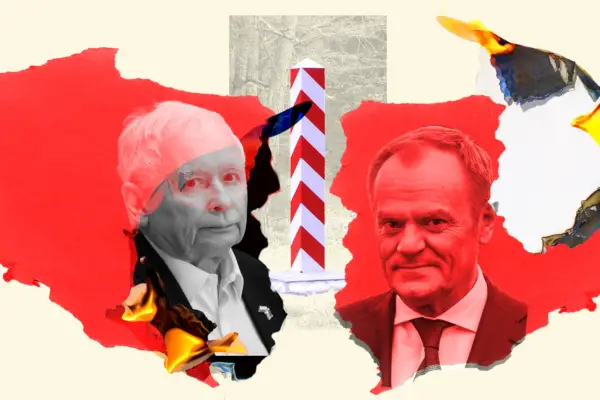
Magyar’s government turned first to Warsaw and Brussels. His first trip abroad as prime minister went to Poland, where Donald Tusk spoke of Hungary’s return to Europe and offered help to cut its dependence on Russian energy. Commission President von der Leyen speaks of a new era for Hungary, and the Commission releases frozen money step by step as reforms pass, 16.4 billion euros in prospect since May. With Kyiv the tone has changed and the terms have stayed. Magyar calls Ukraine the victim of Russian aggression and ties his support for its accession to the rights of the Hungarian minority in Zakarpattia.
Washington had backed Orbán openly: Trump called into the Budapest rally to say the United States was with him all the way. In May Hungary was still buying Russian oil and gas. In parliament Tisza holds 141 seats, Fidesz-KDNP 52 and the far-right Mi Hazánk six, so the government carries changes to the constitution on its own.
Research
DURCHD8 has no study of Hungary of its own. The country appears in three. NATO Consensus as Ceremony, whose observation window ran through the vote, records the election of 12 April 2026 as the first case in which a member’s own democracy moved what lay beyond the alliance’s reach, and counts it as one case. It documents Vance’s campaign in Budapest, a 2024 survey in which 62 per cent of Hungarians agreed with a Russian claim that Ukraine had committed genocide against its Russian minority, the plan for a staged attempt on Orbán, and recordings published by The Insider on 31 March 2026, which by that account showed the foreign ministry passing confidential EU Council deliberations to the Kremlin.
The public note Brussels, Spring 2026: An Alliance Functioning Without Deciding puts the finding in one line: the gap closed at a ballot box, and how often that route is open is unknown. Poland: Two States, One Republic uses Hungary as its counter-case. Under Orbán one actor held the decision rights, and an election could undo that, while Poland’s blockade rests on two mandates.
Whether one election was enough will show when the reforms meet the next one.