Illustration: © Sabine Mescher
United Kingdom · NATO · Russia · China · ECFR: European Council on Foreign Relations · EDINA · European Union · Hungary · RUSI · United States
United Kingdom
On 27 September 2026 armed police and army bomb-disposal teams emptied homes around RAF Fairford, a base American bombers had used to strike Iran. They found petrol in three vans. Fifteen days later Prime Minister Andy Burnham told the Commons the plot was “almost certainly directed by Iran’s Islamic Revolutionary Guard”. In DURCHD8’s work Britain appears as an Atlantic ally with a nuclear decision of its own, as a target of Russian sabotage and as the home of RUSI.



Current State
As of 18 October 2026. The war in which Britain lends Washington its bases has reached British soil, and London answers with sanctions and a turn towards its European neighbours. After the Fairford plot and an incident at RAF Molesworth the government summoned Iran's ambassador and sanctioned two Iranians, and the American bombers have left Fairford for home. On 13 October the head of MI5 said Iran was targeting military sites in Britain and that Fairford was not unique. Britain has sent air defence and a refuelling aircraft to Saudi Arabia.
On Russia London holds a harder line than Washington. When the United States agreed to take Russian diesel, the government replied that its position “could not be clearer”, and Burnham says British sanctions now cover over 90 per cent of Russia's oil-producing capacity. On 14 October Volodymyr Zelensky came to London and left with pledges of more help. In Berlin on 8 October Burnham and Chancellor Merz completed ratification of the Kensington Treaty and launched a partnership against sabotage and cyber attacks. Next comes the UK-EU summit in Brussels on 20 November, with deals on food trade, emissions, energy, youth exchange and immigration on the table, and Burnham bound by his predecessor's pledge to stay outside the single market and the customs union.
Mechanism
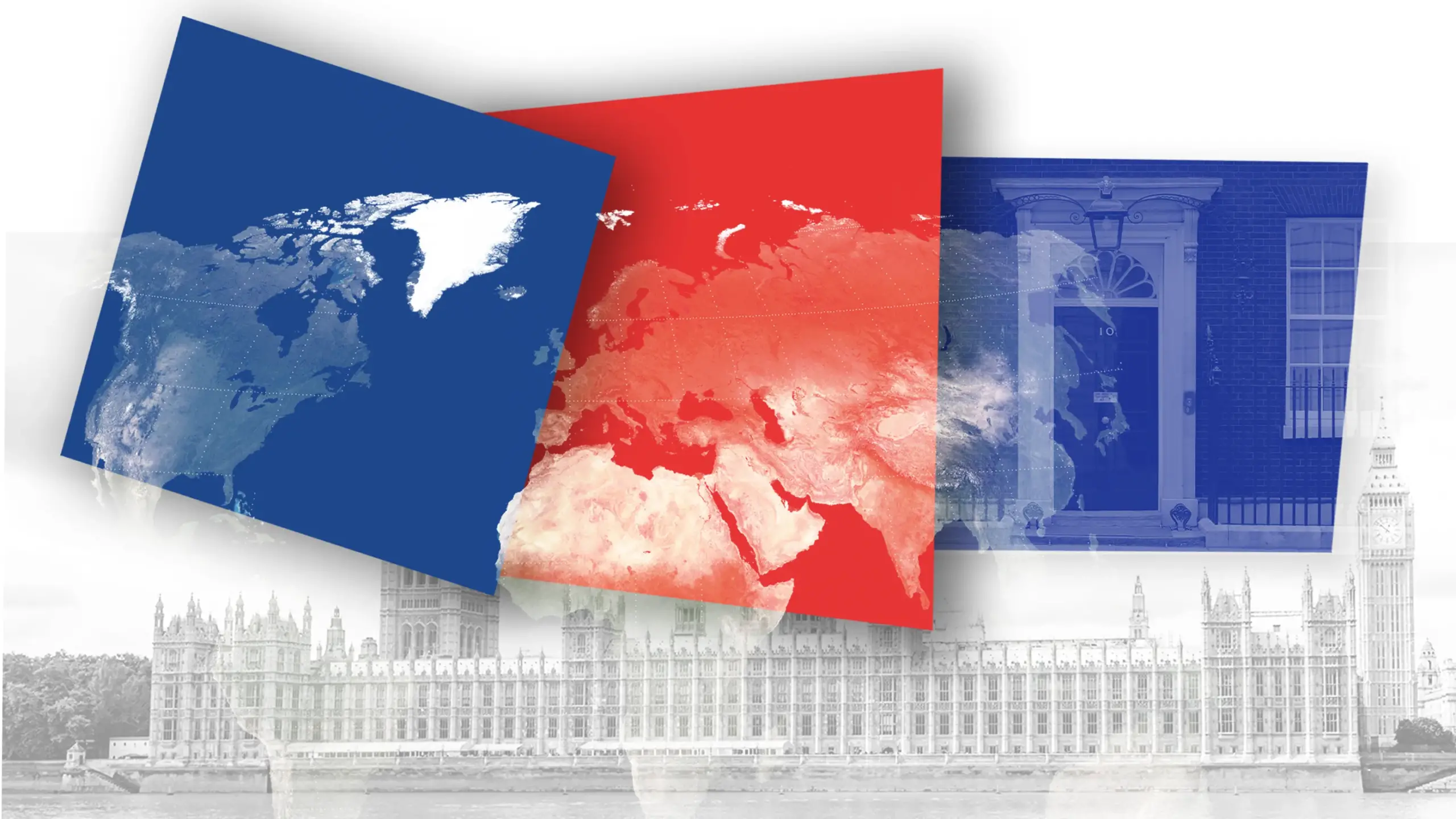
DURCHD8’s NATO study places Britain with the United States and Canada in the alliance’s Atlantic culture, which reads power competition globally and puts the Indo-Pacific first. Britain sits inside the Five Eyes, the intelligence circle that gives some allies more knowledge than others. In the Iran crisis of April 2026 the study found it coordinating a coalition and leaving NATO’s institutions aside. Its nuclear deterrent rests on a national decision, which DURCHD8’s study of the ECFR defence plan names as the source of its credibility. The readiness study counts Britain with Germany, France and the Nordics, the group in which the pull between building sovereign forces and plugging into the alliance runs strongest.
London calls the American missions from Fairford defensive strikes. Tehran calls any base used to attack its territory a legitimate target. The runway is the same. Britain’s value to Washington and its exposure at home have one source: the runways it lends.
At Stake
Near Britain's air bases the risk is physical. Homes around Fairford were emptied in September, and the head of MI5 says the plot was not the only one. In Downing Street the task is to balance two partners. The Pentagon's review of American forces in Europe is to set out access, basing and overflight, while Brussels writes “made in Europe” rules that Britain says will hurt its producers. For Ukraine, Britain is among the governments holding the sanctions line while Washington takes Russian diesel.
When an American request for bases and a European rule for industry pull London in different directions, which commitment does it honour first?
Political Relations
The United States shares intelligence with Britain inside the Five Eyes and has flown from British bases in the war against Iran. On Russian fuel the two now move apart: Washington eases its sanctions on diesel, London tightens its own. On 22 September Burnham raised Diego Garcia and the Falkland Islands with Trump and said Britain would “stand firm in the face of threats” over the islands. Washington’s strategy of December 2025 singles out Britain and Ireland for America’s sentimental attachment.
With the European Union the relationship is being rebuilt, from the strategic partnership agreed in London in May 2025 to the summit in November. With Germany, Europe’s other largest economy and defence investor, Britain is bound by the Kensington Treaty and now a pact against hybrid threats, and Burnham has signalled openness to Germany joining the fighter programme Britain shares with Italy and Japan. Russia is the declared adversary. Burnham says Moscow interfered in the 2016 referendum, and his government adds that the attempts failed and the result stands. With China London keeps a “long-term and consistent” partnership, and Burnham raised Hong Kong and human rights with Xi Jinping.
Research
No DURCHD8 study has Britain as its subject. The country appears in several. NATO Consensus as Ceremony places it in the alliance’s Atlantic culture, inside the Five Eyes and at the head of a coalition in the Iran crisis of April 2026. European Defence Autonomy: A Capable Answer, Wrong Layer names the national decision over Britain’s nuclear weapons as the source of their credibility, and The Readiness Gap Is Structural counts Britain among the states pulled hardest between sovereign forces and the alliance. Russia’s Information Architecture and the Western Decision Cycle lists incendiary devices in Birmingham among the Russian operations of 2024, and Hybrid Warfare Is Already Working tests a forecast published by RUSI in London.
All these passages were written before Andy Burnham took office in July, so the summit of 20 November is the first test of whether his turn towards Brussels changes the Atlantic place they describe.