
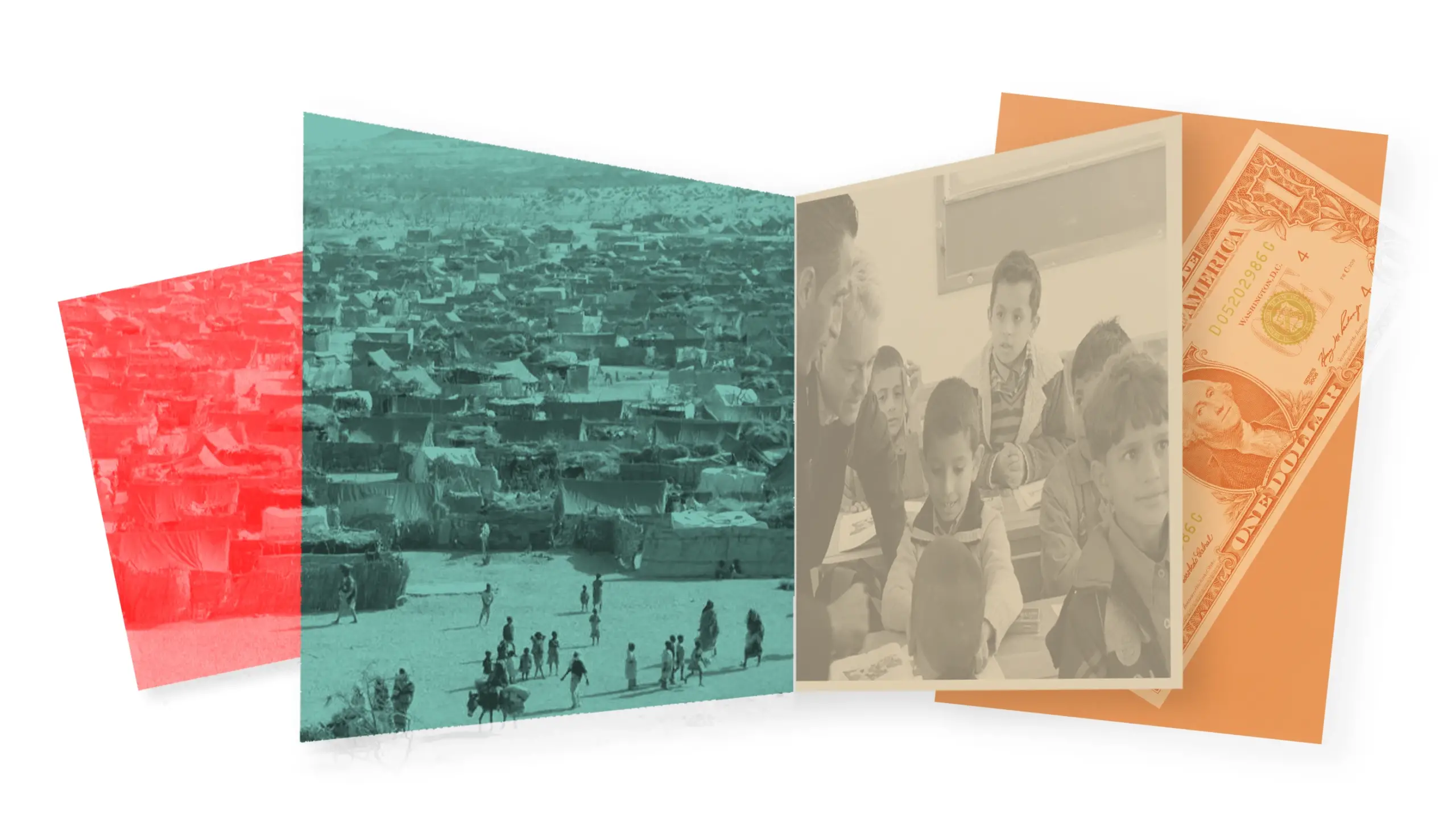
Illustration: © Sabine Mescher
Academia · Civil & NGOs · Corporate · Institutions · Intergov · Media · Non-State · States
Civil & NGOs
Gaza to Moscow, 2026: civil groups carry what others rely on, and how a state reads them decides whether they may work.
On 30 December 2025 Israel told 37 international aid organisations that their registration for Gaza and the West Bank would expire the next day. They had refused to hand over full lists of their Palestinian staff. Israel reads the lists as security vetting. The organisations read them as a danger to the staff named on them. Across DURCHD8’s studies civil groups carry services, records and loyalties that others rely on, and they work on terms that others set.
No terms found.
Current State
As of 18 October 2026. Governments are tightening the terms on which civil groups may work, and where courts stay open, groups on both sides of a conflict use them. On 20 May Israel's High Court rejected a petition for 19 international aid organisations, and in July COGAT, the Israeli body that clears aid into Gaza, called the warnings about its vetting “proven false” and said it would keep groups that refuse it out. On 18 August two Palestinian households were evicted in Silwan after a ruling for the settler organisation Ateret Cohanim. On 5 October the Israeli group Peace Now reported that its petition had forced the disclosure of planned allocations of state land in the West Bank.
On 2 October the US Treasury sanctioned a fundraising network based in France that, it says, used sham charities and cryptocurrency to collect nearly 2 million dollars for Hamas. In Russia the labels multiply. Between July 2025 and July 2026 the authorities declared 124 organisations “undesirable”, against 68 a year earlier, Human Rights Watch reports, and in April the Supreme Court declared the Memorial movement “extremist”.
Mechanism
Civil groups live on what others grant them: a registration, a donor’s money, members’ time, the trust of the people they serve. What those others see in a group decides how much of it arrives. A list of Palestinian aid workers is vetting for Israel and exposure for the organisations. A charity in France presented itself as aid and is, for the US Treasury, a channel for Hamas.
Memorial documented the Soviet terror for thirty-three years. In 2021 a court in Moscow dissolved it for failing to mark its work with the foreign agent label and, as DURCHD8’s Russia study notes, left the documentation itself unchallenged. By the justice ministry’s own count, 4 per cent of those it named foreign agents in 2025 had received foreign money. The label is the penalty. Civil groups also carry loyalties. In Germany churches, unions and clubs once held voters to the two big parties, and they erode together with them. In the east 77 per cent of people belong to no church, against 36 per cent in the west, and there, the Zeitenende study finds, a people’s party loses first.
At Stake
When a civil group goes, the people it served lose the service first: the clinic, the school, the lawyer, the record. By their own account, international NGOs support or deliver more than half of all food aid in Gaza and all inpatient care for children with severe acute malnutrition. In Russia the extremist label stopped OVD-Info's legal aid. Governments are bound by their own words. Donors who called the UN relief agency indispensable tied themselves to it, as DURCHD8's study of the deadlock argues, and when Washington and Israel backed a rival food distribution in 2025, the schools, clinics and register stayed with the agency.
When a licence decides which group may deliver aid, who checks that the aid still arrives?
Political Relations
In Gaza the terms are set by others. The UNRWA and Palestine dossiers and the UNRWA Foundation case place the UN relief agency and dozens of international organisations there, working under rules Israel sets, on money donor governments give and on ground Hamas holds, and the Israel dossier shows the strongest hand: registration, visas and the crossings. In Israel civil groups stand on both sides. A settler organisation wins evictions in court, and on 8 October 21 organisations called for action to protect civilians in Gaza.
The Russia dossier and the case on Russia’s information governance show a state that sorts civil groups by label: foreign agent, undesirable, extremist. In the Poland dossier and case a legal institute and the Church stand inside the quarrel between president and government, and trust in the Church fell from 72 per cent in 2004 to 45 in 2024. Germany shows a slower loss. In the Germany dossier and the Zeitenende case churches, unions and clubs fade together with the parties they once carried. Civil groups gain weight through the people who use them and lose it through the governments that license and fund them.
Research
Civil groups appear in DURCHD8’s studies wherever a state reaches into daily life. North 1990: Structural Complementarity in Gaza counts the staff unions of the UN relief agency among the points where the agency and Hamas meet. UNRWA Colonna Review: Neutrality Verification Collapse reads the review of the agency’s neutrality against what UN and donor statements made of it, and The Deadlock Condition: Institutional Non-Exit for UN, UNRWA, and Donors follows the donors into the bind their own words created.
Russia Governs Information as a State Function opens with the dissolution of Memorial. It reads the foreign agent label as a penalty in itself. Poland: Two States, One Republic lists a religious legal institute and a farmers’ protest movement among the Polish voices that Russian campaigns amplify, whether or not those voices know it. Zeitenende: Macht ohne Bedeutung ist bedeutungslos traces how churches, unions and clubs eroded beneath Germany’s two big parties, and counts the parliamentary scandal over state money for NGOs among the answers that treat a symptom.
Each case can be checked the same way: which of a group’s supports, licence, money or members, gave way first.
Featured Disclosures
Essay — A readable analytical article framing the subject, context, and significance.
Briefing — The decision-maker’s version: key findings, implications, and operational relevance.
Assessment — A concentrated analytical diagnosis for readers who need the argument.
Architectural Analysis — The complete scientific analysis.