
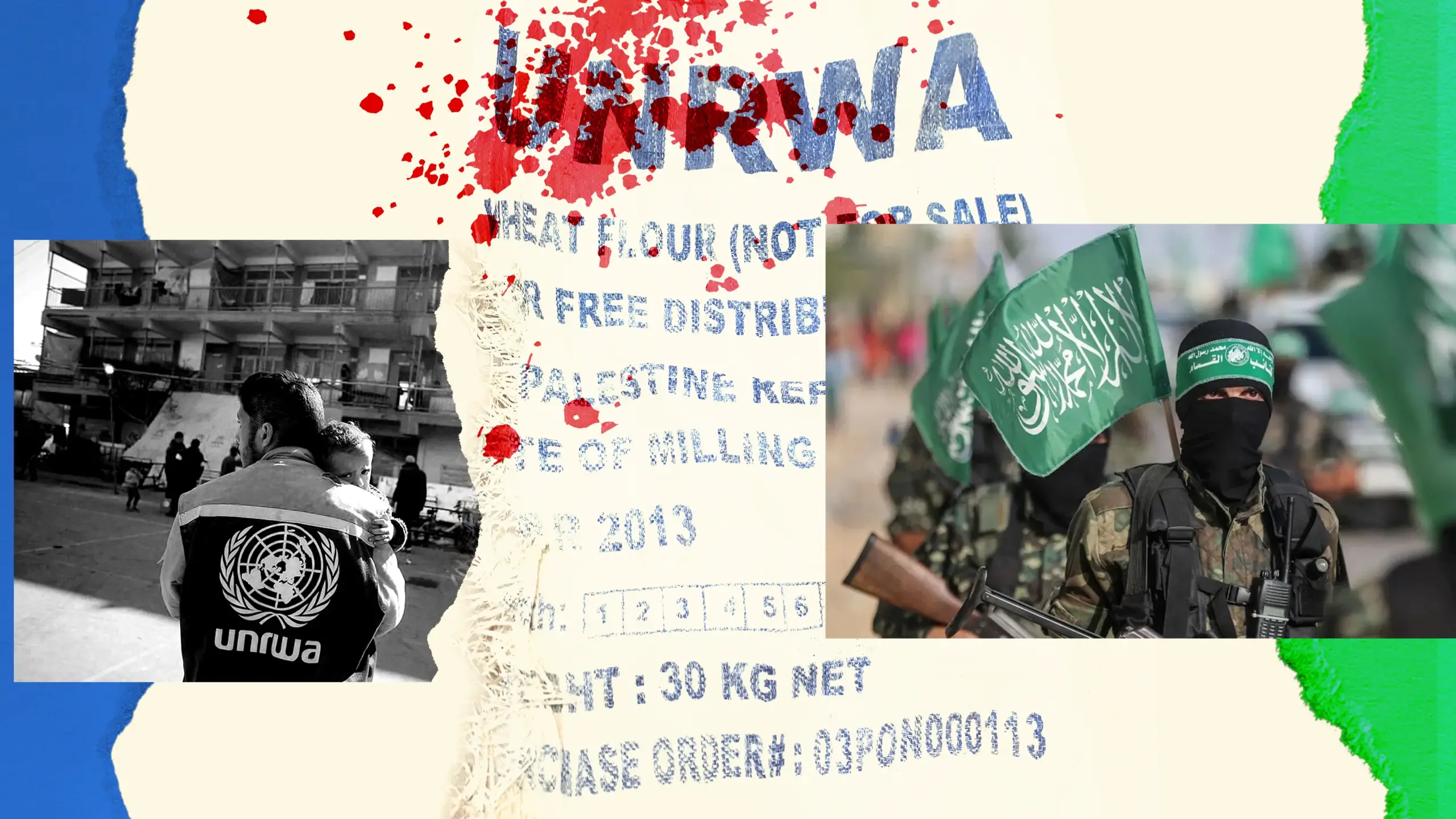
Illustration: © Sabine Mescher
Academia · Civil & NGOs · Corporate · Institutions · Intergov · Media · Non-State · States
Across dossiers: Israel · Palestine · United Nations · UNRWA
UNRWA Foundation
On 6 July 2026, in the courtyard of Al-Aqsa Hospital in Deir al-Balah, Hamas announced that it had dissolved its government in Gaza. Its media office said the staff of the services were “state employees”, ready to work under the new Palestinian committee, and only technical and professional staff would stay in their posts. Israel called it a spin with no significance. Four DURCHD8 studies find one pattern: every measure aimed at one side of Gaza’s arrangement was absorbed by the other.
Companion Documents
Essay — A readable analytical article framing the subject, context, and significance.
Briefing — The decision-maker’s version: key findings, implications, and operational relevance.
Assessment — A concentrated analytical diagnosis for readers who need the argument.
Architectural Analysis — The complete scientific analysis.


Current State
As of 18 October 2026. The finding holds. Hamas has dissolved its government. Its weapons and its service staff have stayed, and the plan has yet to address the agency's side. Hamas and the other factions accepted the Board of Peace's roadmap on 30 July, a deal that pairs demilitarisation with an Israeli withdrawal. Under the deal, the Hamas-run police hand their weapons to the committee when it arrives, and heavy weapons follow later, which Hamas has tied to a Palestinian state. The roadmap folds newly trained police into “existing police structures”. Israel did not accept it, its prime minister said on 9 August.
The committee is still waiting in Cairo, and the stabilisation force has yet to put troops on the ground. On the agency's side the mandate runs to 2029, the Secretary-General said in September that the agency is kept out of coordination meetings, and its acting head has warned that core services could stop by early November without new money. The chain of the next steps is visible. The decommissioning of heavy weapons begins after the committee arrives and the force deploys, and the force's first base, the Guardian has reported, waits for Israel's approval.
Mechanism
The four studies describe one arrangement from four sides. In Gaza a UN agency carries services that elsewhere belong to a state, from classrooms and clinics to the refugee status that families pass on. Hamas has held the ground since 2007 and sets the terms under which the agency’s local staff work. Before October 2023 the agency itself reported that Hamas kept those staff from passing Hamas checkpoints in UN cars. Neither planned the other, and each became a condition of the other’s work.
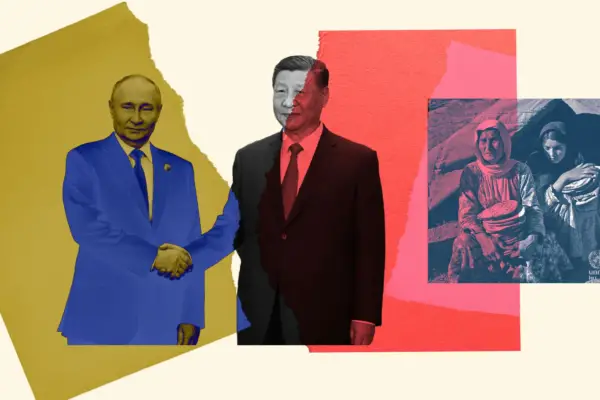
The checks on the arrangement ran through procedure. Section 7 of the terms for the neutrality review of 2024 barred it from making “any findings of fact”. Its authors presented a review of mechanisms, and governments that resumed funding read it as clearance. The owners are bound as well: only the General Assembly can end the mandate, donors have called the agency indispensable for years, and any withdrawal opens a gap the armed side would fill. Russia and China abstained on the plan and defend the agency, at little cost to themselves. Each side holds a piece the other needs, and each outside measure so far has reached one piece.
At Stake
For about two million people the arrangement decides who teaches their children, who treats them and who patrols their streets while the plan waits. Washington, Israel, the UN and the donors own Resolution 2803 and the risk of its failure, as the fourth study argues, and every month of delay is booked to them. Russia and China carry no share. The agency stands outside every timetable. The roadmap of July and the Board's first report to the Council in May leave it unnamed, and whoever governs Gaza after a handover will govern alongside its 10,000 staff, its buildings and its register of nearly 1.6 million refugees.
Which part of the plan, and which date, covers the agency's schools, clinics and register once the weapons are handed over?
Political Relations
Each party holds one piece of the arrangement. Hamas keeps the weapons and the ground west of the yellow line. The UN agency keeps the services and the register, on a mandate from the General Assembly and on voluntary money that in 2025 met about a quarter of its needs, after the United States ended its payments. Israel decides what enters the Strip, holds most of it and has barred its officials from dealing with the agency at all. Washington drafted the plan and chairs the Board of Peace through its president. The talks with Hamas run through Cairo, Doha and Ankara, which guarantee the July deal together with Washington. Russia and China let the resolution pass by abstaining, which the fourth study reads as keeping their freedom to blame its owners. The Palestinian Authority waits for a handover that the resolution ties to its reform, and its president has moved the first parliamentary elections since 2006, and the presidential vote with them, to September 2027.
Research
DURCHD8 published the four studies between 21 November and 7 December 2025. Each takes one side of the same arrangement. North 1990: Structural Complementarity in Gaza measures how the agency and Hamas came to depend on each other, with the economics of institutions as its yardstick. Its full version of 83 pages, signed in July 2026 and deposited on Zenodo in August, closed its record on 5 June. It named five conditions under which its reading would count as refuted and registered ten shocks against them, from the donor freezes of 2024 to Resolution 2803. All five stayed unmet. It set the decisive test at the disarmament of Hamas’s military wing, and the dissolution of its government in July left that test open.
UNRWA Colonna Review: Neutrality Verification Collapse measures the distance between what the review’s terms allowed and what UN and donor statements later made of the result. The Deadlock Condition: Institutional Non-Exit for UN, UNRWA, and Donors follows votes, mandate texts and donor statements to the point where every exit costs more than staying. The Gaza Deadlock Under Great Power Competition tracks Russia and China from Security Council debates in 2018 to their abstention in November 2025. The case turns on two facts that anyone can watch: who holds the heavy weapons, and who holds the register.