Illustration: © Sabine Mescher
Academia · Civil & NGOs · Corporate · Institutions · Intergov · Media · Non-State · States
United Nations
In Davos on 22 January 2026 the US president and envoys of 19 other states signed the charter of a Board of Peace. Its published text calls for the courage to depart from “institutions that have too often failed”. Two months earlier the Security Council had welcomed it as Gaza’s transitional administration and asked states to give its acts “full recognition”. It works outside the UN. In DURCHD8’s Gaza studies the UN lends its name, by vote, review and resolution, to arrangements others run.
Current State
As of 18 October 2026. The house is smaller, its largest payer is in arrears, and its next chief is still unchosen. The budget for 2026, 3.45 billion dollars adopted without a vote on 30 December, cut resources by over 9 per cent and posts by 21 per cent, and 2,900 positions went on 1 January. On 30 September 52 states owed 1.46 billion dollars to the regular budget, 1.31 billion of it owed by the United States, and peacekeeping arrears stood at 4.1 billion. In January Washington ordered its withdrawal from 31 UN entities.
The Security Council adopted 20 resolutions between January and 14 October, against 44 in all of 2025. China and Russia cast both vetoes of the year, on the Strait of Hormuz in April and on the Iran sanctions panel in September. Since 30 July the Council has held six straw polls on the succession to António Guterres, whose term ends on 31 December. The sixth, on 16 October, was the first with coloured ballots that set the permanent members' votes apart. Rebeca Grynspan of Costa Rica stayed ahead, PassBlue and The National reported, and each of the three leading candidates met discouragement from two permanent members. A name reaches the General Assembly with nine votes and no veto, and the term it fills begins on 1 January.
Mechanism
The United Nations lends authority in three forms, and a different majority stands behind each. The General Assembly votes. In December 2025 it renewed the refugee agency’s mandate by 151 to 10, a mandate only the Assembly can end, while governments give more than nine tenths of the agency’s money by choice. The Security Council resolves. Its Gaza resolution welcomed a board outside the UN, financed by voluntary contributions, which reports in writing every six months and holds its authority until the end of 2027. The Secretary-General reviews. The 2024 review of the agency’s neutrality was barred from establishing facts, and governments took its findings on procedure as clearance. In the reading of DURCHD8’s study, a check of procedures stood in for a finding on facts.
Washington’s representative called the Gaza resolution a framework for moving ahead with the stabilisation force. China’s said it gave the United Nations “no effective participation”. Money and troops come from members who decide year by year, each from its own reading.
At Stake
The cuts reach the field. Peacekeeping missions were told in October 2025 to cut spending by 15 per cent, which the UN said meant roughly a quarter fewer personnel. For Gaza and the West Bank the UN's 2026 appeal was 2.44 billion dollars short in August. The member states have the Council in play: both of its vetoes in 2026 concern Iran. For Washington and the UN that endorsed its plan, the risk of failure in Gaza is shared, as DURCHD8's study of the great powers argues, while Russia and China, who abstained, carry none of it. A new Secretary-General takes over this smaller house on 1 January 2027.
When the Board of Peace next reports to the Council, with the force still waiting to deploy and the Palestinian committee still in Cairo, what can fifteen members do beyond taking note?
Political Relations
Washington is assessed at the maximum rate, 22 per cent of the regular budget, and on 30 September owed 1.31 billion of the 1.46 billion dollars still unpaid. A year earlier it had owed 1.5 billion. The plan for Gaza is American, and so is the chair of the board that carries it out. China pays in full and late. It settled 641 million dollars for the regular budget on 1 September and still owes 679 million for peacekeeping, and with Russia it cast both vetoes of 2026.
The Assembly’s majorities lie elsewhere. The United States and Israel voted against the refugee agency’s renewal and lost, and in June the Assembly chose Bangladesh’s foreign minister as its president by 99 votes to 91. Seats are won region by region: Germany lost its bid for the Council with 104 votes, and Austria and Portugal took the two seats. The secretary-generalship runs through the Council, where any permanent member can block a candidate.
Research
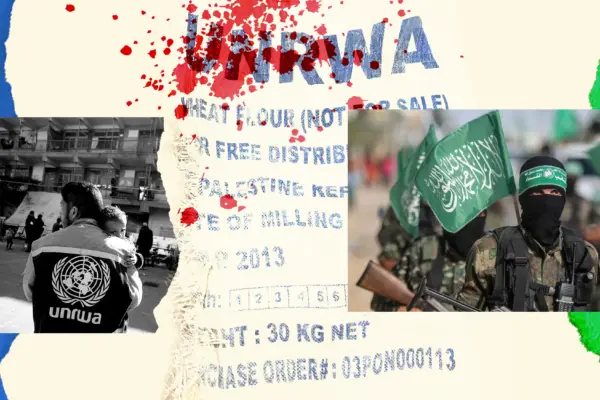
DURCHD8 studied the United Nations where its procedures meet Gaza. UNRWA Colonna Review: Neutrality Verification Collapse treats the 2024 review, ordered by the Secretary-General, as an act of the organisation: its terms barred findings of fact, and the UN and donor statements that followed read it as reassurance. The agency reported in September 2026 that 41 of the 50 recommendations were fully in place. The Deadlock Condition: Institutional Non-Exit for UN, UNRWA, and Donors puts the UN itself into the bind it describes, beside the agency and its donors. The Gaza Deadlock Under Great Power Competition reads Resolution 2803 as the moment the deadlock changed owners. North 1990: Structural Complementarity in Gaza describes the arrangement on the ground on which these decisions in New York act, and its full version on Zenodo tests it against five conditions for its own refutation, all of them unmet by June 2026.
The claim of authority lent by procedure can be tested wherever the UN endorses what others run, first in the Board of Peace’s reports to the Council.