
Illustration: © Sabine Mescher
Academia · Civil & NGOs · Corporate · Institutions · Intergov · Media · Non-State · States
Palestine · Israel · UNRWA · United Nations
Palestine
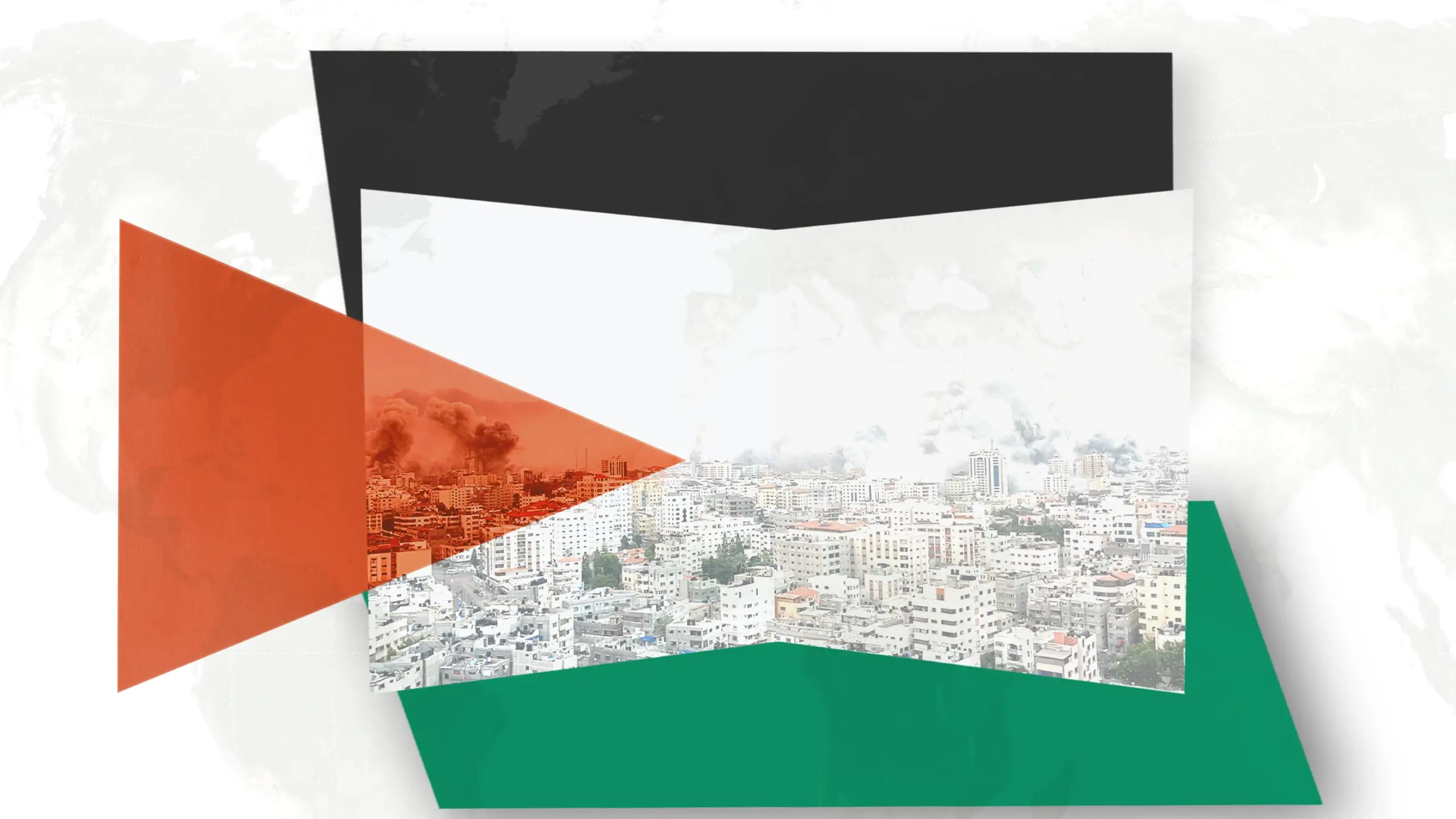
Yellow cement blocks mark a line across Gaza, and Israeli troops have moved them deeper into the Strip several times since the ceasefire of October 2025. The land behind them, 65 per cent of the Strip by the UN’s count, is off limits to most residents. About two million people live on the rest. A UN agency has kept the refugee register there since 1950, Hamas has held the streets since 2007, and DURCHD8’s study finds that each keeps the other going.
Current State
As of 18 October 2026. A year after the ceasefire, the line has hardened and the plan has stalled where Israel's withdrawal waits on Hamas's disarmament. Israeli airstrikes continue west of the line, and Gaza's health ministry counted 1,431 Palestinians killed between the ceasefire and 30 September, the UN reports. Israel's army says it targets Hamas and other militants. On 30 July Hamas and other factions accepted the Board of Peace's roadmap, with commitments to demilitarise and to an Israeli withdrawal. Israel's prime minister said on 9 August that his country did not accept it. The Palestinian committee meant to run Gaza's civil service still sits in Cairo, and the stabilisation force has yet to deploy.
In the West Bank the UN counts settler violence at unprecedented levels, and more than 33,000 people from three refugee camps remain displaced, the longest displacement there since 1967. Israel holds back some 6 billion dollars of revenue it collects for the Palestinian Authority, which pays its staff in part. President Mahmoud Abbas has moved the parliamentary elections set for 28 November, together with the presidential vote, to September 2027. Decisions on a settlement tender east of Jerusalem and, by one report, on the first base of the stabilisation force wait for Israel's election on 27 October.
Mechanism
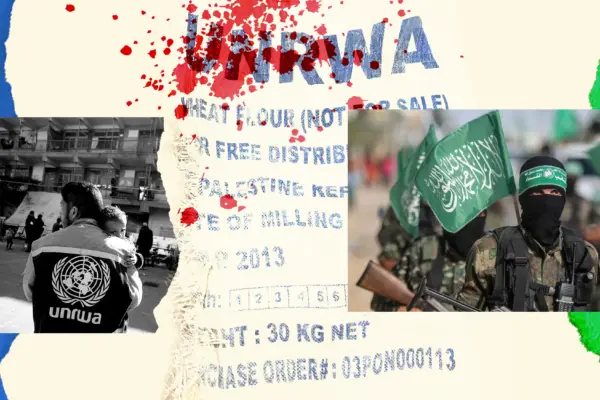
Two systems act on the same people in Gaza, and neither was built for the other. The UN agency keeps the register of about 1.59 million refugees, a status passed from parents to children. Before the war it ran 288 schools and 22 clinics with more than 13,000 staff, nearly all of them local people who use its services themselves. The workforce is the population. Hamas holds the ground. It decides who passes a checkpoint and which buildings open, and until October 2023, by the agency’s own reporting, it barred the agency’s local staff from crossing its checkpoints in UN vehicles. The agency keeps daily life from collapsing, which any ruler needs, and the ruler sets the terms on which the agency works.
The register has outlasted three rulers and serves under a fourth: Egypt’s military administration, Israel’s military government from 1967, the Palestinian Authority from 1994 and Hamas since 2007. In June 1967, days after taking Gaza, Israel agreed in an exchange of letters that the agency would carry on with Israel’s full cooperation, and the Knesset ended that exchange in October 2024. Whoever holds the ground needs what the agency keeps running.
At Stake
About 2.1 million people live with both systems and with the line. By 7 October Gaza's health ministry had counted 74,250 Palestinians killed since October 2023, the UN reports. Israeli figures put the dead of the attack of 7 October 2023 at more than 1,200, and the army counts 474 soldiers killed in Gaza since its ground operation began. Near the line, residents told the UN, they learn where it runs from where the shooting comes from. Israel's chief of staff called it a new border line in December 2025. Donors carry the bill: of the 4.06 billion dollars the UN's 2026 appeal for the Palestinian territories asks for, 2.44 billion was missing in August. The plan of 2025 hands Gaza back to the Palestinian Authority once it has reformed, and on 13 October Australia, Canada, France and Britain noted that an entire generation of Palestinians has reached adulthood without choosing its representatives.
If Hamas hands over the streets, which Palestinian body will take them, and on whose mandate?
Political Relations
Recognition and control sit in different hands. More than four fifths of the UN’s 193 members recognise the State of Palestine. Washington blocks its full membership. Israel decides what enters Gaza, since May through Kerem Shalom alone for cargo, and holds back the Palestinian Authority’s largest source of revenue. Washington wrote the plan, and its president chairs the Board of Peace, which the Security Council authorised until the end of 2027. Egypt, Qatar and Türkiye carry the talks with Hamas and, with the United States, guarantee the July deal on its weapons. Britain, France and Canada announced steps against goods from settlements in September 2026, and Ireland’s ban has applied since 15 September. Russia and China let Resolution 2803 pass by abstaining, which in the reading of DURCHD8’s study of the great powers leaves the risk of failure with the plan’s owners. Inside Gaza the weapons are Hamas’s. The register stays with the UN agency, which Washington stopped funding in 2025 and which the resolution leaves unnamed.
Research
DURCHD8 measured the arrangement with the economics of institutions and published North 1990: Structural Complementarity in Gaza in November 2025. The full version of 83 pages is dated 4 July 2026, signed with DURCHD8’s own timestamps and deposited at Zenodo in August. It closed its record on 5 June and named five conditions that would refute it, among them the agency leaving Gaza or Hamas losing the ground, each for a year with the gap left open. It registered ten events against them, from the donor freeze of 2024 to Resolution 2803, and all five conditions stayed unmet. Two of the events were attempts at replacement, a US- and Israel-backed food distribution from May 2025 on the agency’s side and the resolution on the armed side, and both left their target in place.
UNRWA Colonna Review: Neutrality Verification Collapse shows that the neutrality review of 2024 could examine procedures and was barred from findings of fact, The Deadlock Condition: Institutional Non-Exit for UN, UNRWA, and Donors follows the UN and the donors into a bind where each exit costs more than staying, and The Gaza Deadlock Under Great Power Competition the gains Russia and China draw from it. Since the record closed, Hamas has dissolved its government and kept its weapons. The study draws its line at the disarmament of the military wing. The arrangement would turn when the weapons change hands, or the register does.